

California Title 24 Energy Standards Explained for Home Remodels
California Title 24 sets the energy rules you must meet when remodeling a home. You’ll trigger requirements for windows, insulation, ducts, lighting, HVAC, and electrical systems based on the scope of work, not every repair. The 2025 code tightens standards with more duct sealing, stronger ventilation, and new electrification options, plus solar and battery mandates for many projects. You’ll use HERS testing and California-certified energy models to demonstrate compliance before permits. If you keep reading, more specifics await.
What California Title 24 Covers for Home Remodels
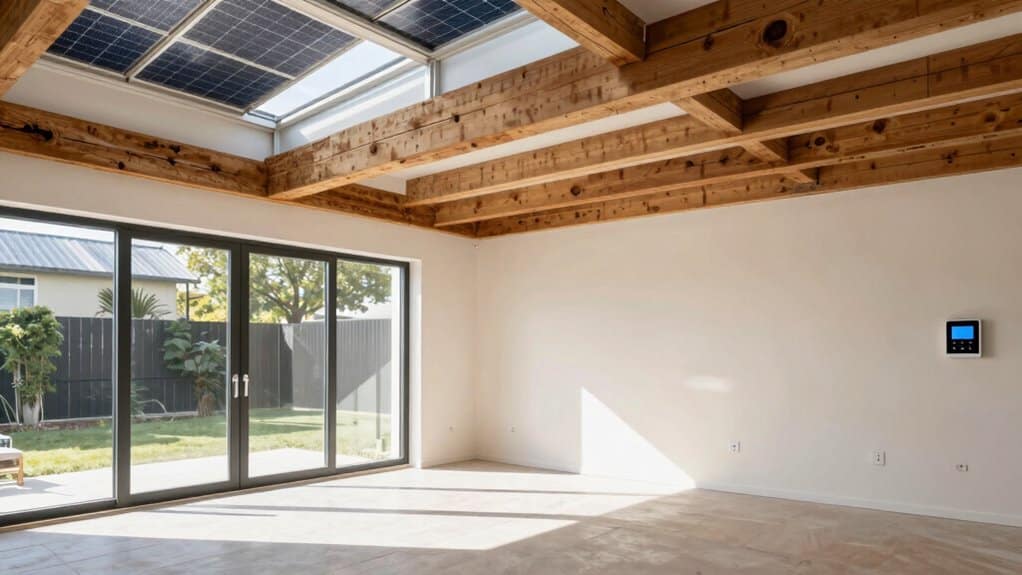
California Title 24 sets the rules for what counts as a remodel from an energy-efficiency standpoint, so you’ll want to know when changes trigger its requirements.
In short, certain renovations activate compliance, while some repairs do not. If you replace or enlarge windows and doors, upgrade HVAC systems, modify ducts, or alter insulation, you’re facing Title 24 compliance.
Lighting changes in kitchens, bathrooms, and garages, plus water heater upgrades, also count toward energy upgrades.
Distinctions matter: alterations, which modify energy usage, require full compliance certification, whereas simple repairs don’t.
Distinctions matter: alterations require full energy-compliance certification, while simple repairs do not.
Building envelope work—roofs, exterior walls, and insulated floors—can trigger standards, especially when you add space or change usage.
Permits and pre-construction documentation often formalize these compliance challenges before any work begins.
Key Changes for 2025 Energy Code Adoption
The 2025 Energy Code adoption brings notable shifts that affect nearly every project, from new builds to alterations.
You’ll face more stringent requirements across buildings, reflecting a roughly 30% increase in stringency versus 2022 standards. The scope now covers new construction, additions, and alterations for residential and nonresidential buildings, with single-zone heat pump baselines expanded.
HVAC and envelope rules tighten, including mandatory duct sealing, an R-22 (or 0.043 U-factor) ceiling/roof insulation, and reduced whole-house fan and attic vent area.
Electrification expands options for space heating, water heating, cooking, and pool heating, accelerating the shift from natural gas.
PV and battery mandates grow, promoting energy resilience. Expect enhanced lighting controls and sensors, all aligning under energy efficiency goals within the building codes framework.
How Ventilation and Heat Pumps Impact Remodels
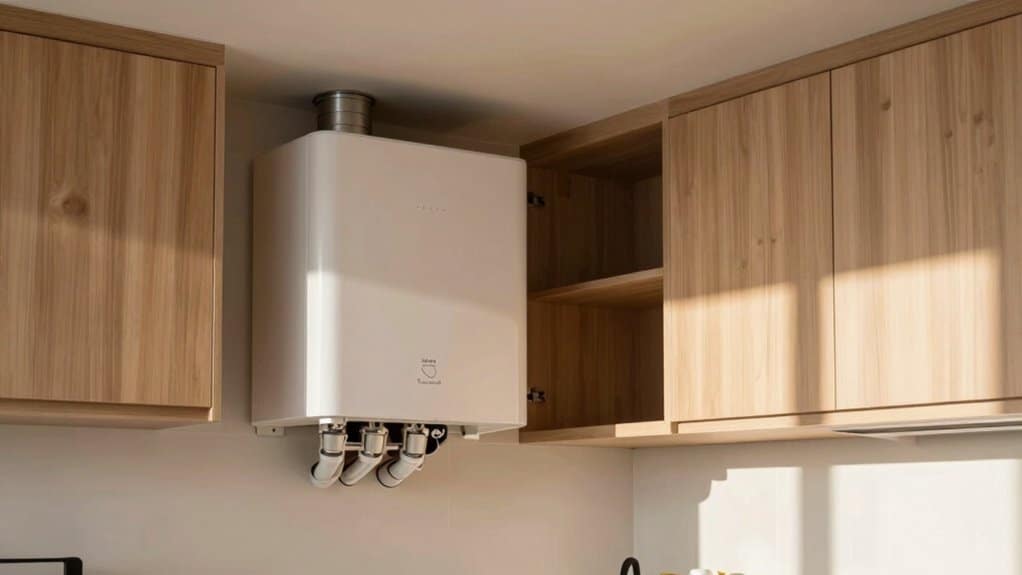
As the 2025 Energy Code expands, ventilation and heat pump requirements increasingly shape remodel projects.
You’ll see the minimum ventilation volume rise to 1 cfm per 100 sq. ft. plus 7.5 cfm per occupant, with occupants based on bedrooms. A 3-bedroom, 1,800 sq. ft. townhouse needs about 48 cfm continuous ventilation, and the new formula uses the larger of occupant-based or area-based rates.
Whole-house ventilation becomes mandatory, via a continuous bathroom fan or central HVAC supply/return. In multifamily buildings, balanced ventilation is required, and HERV paths may apply to improve cost-effectiveness.
Whole-house ventilation becomes mandatory via continuous bathroom fan or central HVAC supply/return; balanced ventilation required in multifamily buildings.
Heat pump efficiency matters, with updated VRF options and prescriptive verification by HERS raters. Expect stronger duct sealing, testing, and upgraded airflow controls as you remodel.
Ventilation strategies and heat pump efficiency matter.
Solar, Batteries, and Electric-Ready Requirements
Solar, Batteries, and Electric-Ready Requirements are shaping how you plan new residential, commercial, and multifamily projects.
Title 24 mandates solar PV systems for new builds, sized by floor area and occupancy factors, with calculations like kWPVdc = (CFA × A) / 1000.
New 2025 updates raise PV capacity in certain occupancies and apply to nonresidential and high-rise multifamily projects.
Battery storage is now required alongside PV for many commercial properties, sized by Section 140.10 equations, with a 25% PV size reduction when paired with qualifying storage.
You’ll use tools such as the Solar PV Calculator and California Solar Shade Analysis to verify access and sizing.
Compliance may apply from January 1, 2026, for permits issued afterward.
solar panel integration, battery storage requirements.
Compliance Tools and Resources for Remodel Projects
Compliance tools and resources for remodel projects keep you aligned with Title 24 requirements at every stage.
You’ll use HERS verification for mechanical changes, additions, and major remodels to confirm post-installation efficiency, performed by certified HERS raters.
Title 24 calculations happen before permits, with energy models submitted by your energy consultant and generated through California Certified Energy Reading programs.
Title 24 calculations precede permits, using energy models crafted via California Certified Energy Reading programs.
CEC-approved tools, like EnergyPro and CBECC, simulate envelope, lighting, HVAC, and water heating performance, ensuring official permit documents are valid.
Compliance forms help identify the right Part 6 forms, while MAEDbS lists approved luminaires your designer must specify.
Local AHJs verify JA-marked products and forms, guiding your permitting, planning, and post-construction commissioning alongside energy consultants for continued compliance.
Wrapping It Up
You’ll find California Title 24 remodeling rules clearer than you’d expect, with practical steps you can take now. As codes evolve, focus on energy efficiency, ventilation, and the growing role of heat pumps, solar, and storage. Keep plans aligned with 2025 changes, verify requirements for electric-ready spaces, and use available compliance tools to stay on track. By staying proactive and organized, you’ll simplify approvals, save energy, and deliver a safer, more comfortable home renovation.
ROI of Remodeling Projects: What Adds the Most Value to Your Home
Exterior upgrades yield the strongest home-value returns, especially a high-quality garage door and durable siding. A stylish garage door often tops ROI lists, with 194% in 2024 and up to 268% in 2025, while fiber-cement or vinyl siding recoups most costs and boosts curb appeal. Pair these with energy-efficient windows, solid entry doors, and even stone veneer where appropriate. Minor kitchen updates also help. If you keep exploring, you’ll uncover more strategies and concrete costs.
Cost-Effectiveness of Exterior Upgrades: Doors, Siding, and Stone Veneer
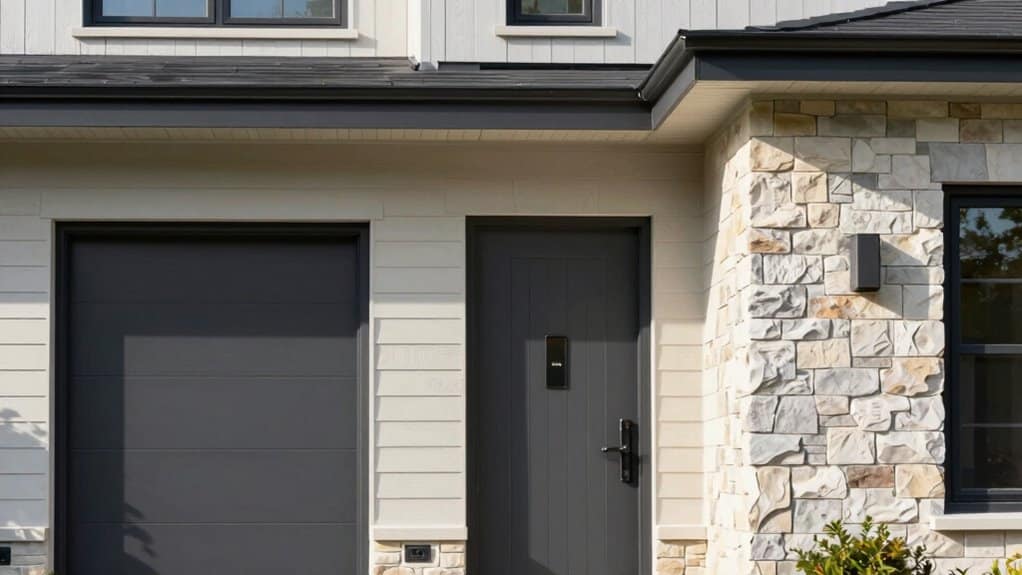
Exterior upgrades like doors, siding, and stone veneer offer strong returns by boosting curb appeal and home value.
When you consider cost-effectiveness, you’ll find fiber-cement siding replacement yields the highest ROI at 113.7%, while vinyl siding recoups 96.5%.
If you’re aiming for standout value, manufactured stone veneer shines with a 207.9% ROI, and regional data in the DMV shows about 94% ROI for stone veneer on a $10,000 project, adding roughly $9,400 in value.
For broader choices, siding options vary, yet exterior upgrades generally return 60-90% of costs.
You gain not only aesthetics but improved durability and energy efficiency.
Stone veneer and siding options both contribute greatly to resale value, guiding your decision toward impactful, cost-conscious improvements.
Additionally, energy-efficient window and door updates can lead to annual savings of up to $465, making them a smart investment for boosting property value and reducing utility costs.
The Big ROI Drivers: Garage Doors and Entry Doors That Sell
Garage doors and entry doors are standout value leaders, delivering strong ROI and boosting curb appeal in a single upgrade.
You’ll notice faster sales, higher energy efficiency, and a clearer path to recouping your investment, with garage doors often leading ROI in multiple studies.
As you explore these doors, focus on the value they add to both aesthetics and resale potential, aligning with the goal of selling faster and smarter.
Door Value Leaders
Numbers aren’t just trivia here—they signal a clear trend: doors sold as value drivers deliver outsized ROI. When you consider garage and entry doors together, you’re looking at top-tier returns that outpace many other projects.
The data show remarkable regional strength and steady cost efficiency, making this a smart focus for value. Think about how door design and materials influence both curb appeal and performance. Modern options can lift list price by about 1–4%, while enduring materials guarantee long-term value.
Enhanced security adds peace of mind buyers notice. With ROI persisting upward—from 102.7% in 2023 to 268% nationally in 2025—the case for upgrading doors is compelling and practical.
- ROI leaders: garage doors and entry doors as prime value drivers
- Emphasis on door design and door materials choices
- Security and weather performance boost perceived value
- Cost efficiency supports strong resale impact
- Regional gains reinforce broad applicability
To further enhance curb appeal and performance, consider incorporating outdoor lighting and pathway designs that complement the home's architecture.
Curb Appeal Boost
You’ve seen how doors can drive strong value, and now the spotlight shifts to curb appeal—the first impression that sets the tone for a home sale.
Curb appeal matters because visually impactful changes are perceived as high-value by buyers, helping your home stand out. A new garage door boosts overall curb appeal and delivers the highest ROI, with ROI numbers climbing into the 190s to 270% range in recent reports.
An upgraded entry door complements this look, adding solid value at comparatively low cost. Together, these updates shape value perception and can accelerate offers.
The typical garage door cost sits around $4,500, while a steel entry door averages about $2,355, making curb appeal upgrades efficient, influential, and financially prudent.
ROI Spotlight: Doors
Curious how a front-facing upgrade can reshape your home's value? Doors dramatically influence curb appeal and resale outcomes, with garage and entry doors delivering standout ROI.
In 2024, garage door replacements averaged 194% ROI, rising to 268% in 2025, topping many projects. Entry doors, especially steel, reached 188% ROI in 2024, and some regions see profits over 315%.
These upgrades cost less than most exterior improvements while delivering strong returns, and they often outpace kitchens or baths. Beyond price, new doors enhance door security and energy efficiency, reducing heat transfer and boosting resale value.
Local data show regional gains, with notable ROI in Chicago and Pacific regions. Consider door security, energy efficiency, and overall functionality when planning your next upgrade.
Furthermore, modern appliances in the kitchen can significantly enhance buyer perception, creating a welcoming environment for new owners.
- High ROI drivers: garage doors and entry doors
- Lower cost, higher value than many remodels
- Regional variations to watch
- Energy efficiency boosts resale value
- Enhanced security adds peace of mind
Siding and Windows: Balancing Curb Appeal With Value
Siding and window upgrades are prime examples of balancing curb appeal with value, because the right choices deliver both a striking first impression and solid resale gains. You’ll find vinyl siding offers a solid 70–75% ROI, with regional averages around 70%, while fiber cement siding can reach about 88.4% nationally. Both protect against moisture and reduce future repair costs, yet siding often delivers the strongest visual impact for buyers, boosting curb appeal. Window replacement yields 60–70% ROI, with vinyl windows around 67.1% and wood around 66% regionally, delivering energy efficiency and a noticeable appearance upgrade. Prioritize based on resale goals, energy savings, and market competition; consider siding aesthetics and window efficiency as linked contributors to overall value. For homeowners in San Diego, outdoor additions such as pergolas and backyard decks can also enhance both home value and outdoor usability.
Inside Scoop: Minor Kitchen Remodels That Pay Back
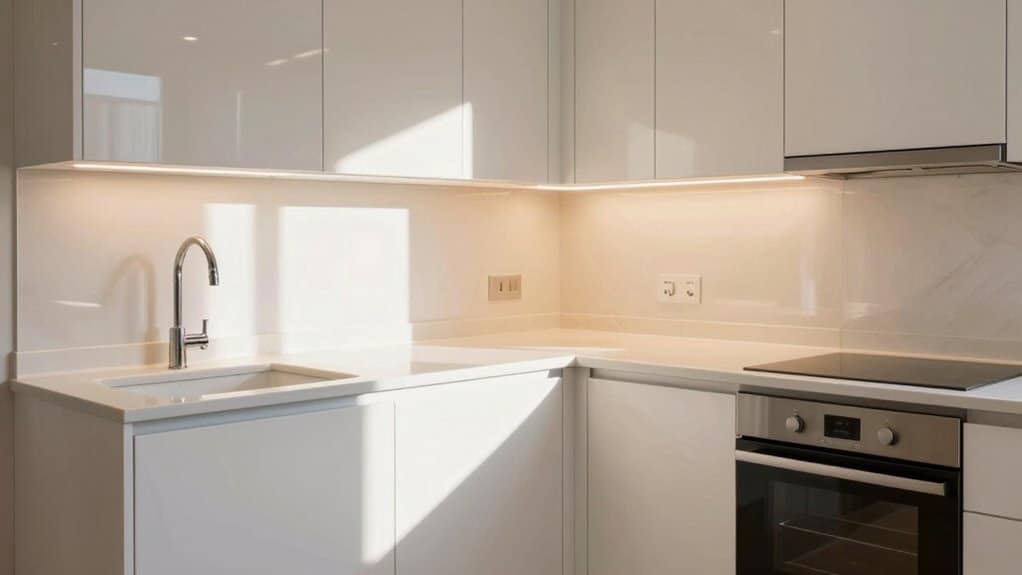
Minor kitchen remodels can be a smart investment when you’re selling a home, because small, well-chosen changes often deliver strong returns without the upheaval of a full renovation.
You’ll see ROI rise when you focus on practical updates that buyers notice, like refreshed cabinets, new appliances, and better lighting. National and Chicago data show solid paybacks, with high-ROI upgrades guiding how you spend.
With kitchen trends leaning toward efficiency and style, careful choices stay affordable while boosting value. Consider how remodeling tips can maximize appeal without overdoing it.
Your goal is a balanced, modern look that feels fresh and functional. A key area to focus on is the value of kitchen remodels which not only enhances aesthetics but also adds significant property value.
- Cabinet refacing
- Energy-efficient appliances
- Quartz or granite countertops
- Improved lighting
- Tile backsplash
Material Choices That Maximize Resale Value
When you choose exterior upgrades, you’ll see how durable siding, energy-efficient windows, and strong entry doors each influence resale value. This matters because fiber cement siding, efficient windows, and modern doors consistently deliver solid ROI and curb appeal that buyers notice. Additionally, upgrading to architectural shingles enhances both style and durability, offering a lifespan of 20-30 years and reducing the need for frequent replacements.
Exterior Upgrades ROI
Exterior upgrades can greatly influence resale value, and choosing the right materials makes a measurable difference. You’ll see strong ROI from upgrades like garage doors, steel entry doors, and stone veneer, with notable impact on curb appeal and durability.
When selecting exterior materials, prioritize value-driven choices that balance aesthetics, cost, and performance. Sustainable materials and well-designed landscaping enhancements can amplify overall appeal and energy efficiency, while remaining mindful of regional preferences and resale expectations.
Consider how each option stands up to weather, maintenance, and security concerns, because longevity translates to higher perceived value. Informed decisions today help maximize your home’s market position and homeowner satisfaction tomorrow.
- Garage Door Replacement tops visible transformation with high ROI
- Steel Entry Door boosts security, energy efficiency, curb appeal
- Manufactured Stone Veneer delivers dramatic visual impact
- Fiber-Cement Siding Replacement offers durability and value
- Entry Door Alternatives (Fiberglass) provide weather resistance and customization
For roofing, asphalt shingles are a cost-effective choice that also offer fire resistance, making them a preferred option in regions like California.
Durable Siding Options
Durable siding options matter because the right choice can boost curb appeal while withstanding weather and time.
When you choose fiber cement, you gain strong ROI and long life, often 50+ years with proper maintenance, plus design flexibility that mimics wood or stucco without the upkeep.
Vinyl siding offers affordability, with 70% to 97% cost recapture at resale and 20 to 30-year lifespans, removing painting requirements but requiring periodic replacement.
Engineered wood provides upscale look at a middle price point, delivering aesthetic value with lower maintenance than traditional wood.
Steel siding adds durability and low maintenance, reinforcing value through long-term performance.
Consider the balance of siding materials and maintenance requirements to maximize resale value.
Energy-Efficient Windows Value
Energy-efficient windows can boost resale value while trimming ongoing costs, so choosing the right materials matters as much as the upgrade itself. You’ll see solid ROI from vinyl or wood, with general window replacement ROI around 60-70% and national averages near 70-80%.
Energy savings enhance appeal, since Energy Star windows cut utility bills and often reduce energy use by up to 30%. Features like double- or triple-pane glass, Low-E coatings, and gas fills boost efficiency while lowering maintenance burdens.
As you compare options, remember energy savings and buyer appeal drive quicker sales and higher offers. Ultimately, energy-efficient choices help your home feel newer and more comfortable, attracting buyers who recognize long-term value.
- Energy savings and buyer appeal
- Curb appeal from upgraded aesthetics
- Reduced drafts and better noise insulation
- Fewer maintenance concerns for buyers
- Higher perceived value in competitive markets
Practical Guide to Prioritizing Remodeling Projects for Highest Returns
To prioritize remodeling projects for the highest returns, start by focusing on the items that consistently deliver the strongest cost recovery and resale boosts.
Exterior upgrades top the list, with garage door replacements delivering the highest ROI and steel door replacements close behind, making them powerful early bets.
If you want substantial value, consider manufactured stone veneer, though it carries a higher upfront cost.
For ongoing value, fiber-cement or vinyl siding recoups most of its price at resale and outdoor improvements, such as landscaping improvements and outdoor amenities, support broad appeal.
Mid-range kitchen and bathroom updates also perform well, especially minor kitchen remodels and midrange baths.
When planning, balance outdoor living space expansions and durable exterior work to maximize overall ROI across markets.
Wrapping It Up
You’ll get the most value by prioritizing projects with proven returns, like entry and garage doors, sturdy siding, and energy-efficient windows. Consider minor kitchen updates and smart material choices that boost resale appeal without breaking the bank. Balance curb appeal with durable, cost-effective options, and align projects with your home’s style. Plan carefully, track costs, and focus on improvements that buyers notice first. With a thoughtful approach, you’ll maximize value while preserving your budget and timeline.
How to Prepare Your Home for a Remodeling Project (Room by Room Checklist)
Begin with a clear plan and budget, then secure permits. Start room by room: in the kitchen, check layout, storage, and finishes; in the bathroom, verify plumbing, fixtures, and ventilation; in the living areas, inspect flooring, lighting, and any needed structural checks; in the bedroom, plan storage and comfort upgrades. Develop a realistic timeline and milestones, and gather multiple contractor quotes. Stay organized with a phased approach, tracking progress and potential delays. If you keep going, you’ll gain practical steps to apply.
Kitchen: Assessing Layout, Storage, and Finishes
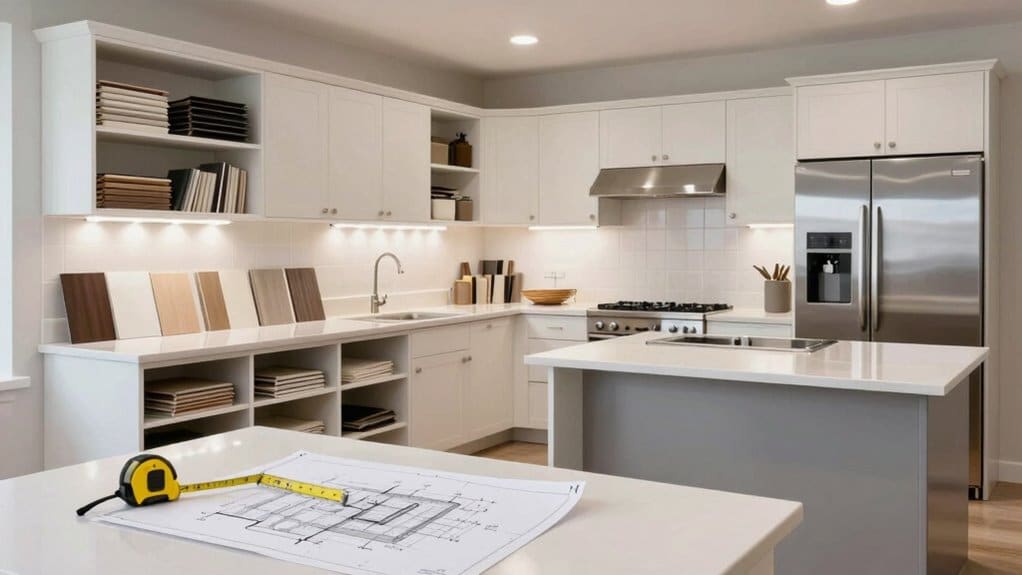
Evaluating your kitchen’s layout, storage, and finishes begins with a clear view of how you move through the space each day.
You’ll assess the current layout for workflow efficiency, spotting traffic bottlenecks and awkward movements that slow you down. Note daily challenges like limited counter space and how you place appliances, since space utilization matters from storage to function.
Consider that nearly half of homeowners reconstruct their layouts, using this as motivation to plan thoughtfully.
Nearly half update their layouts, turning ambition into thoughtful, practical kitchens.
For storage solutions, check existing setups for pots, pans, and utensils, and identify clutter hotspots and underutilized corners.
Prioritize pull-out pantry shelves and custom cabinetry, allocating substantial attention to sleek, soft-close cabinets that blend with durable finishes. This sets a solid foundation for a balanced, practical kitchen, making it essential to evaluate your kitchen’s layout and how it impacts overall functionality.
Bathroom: Plumbing, Fixtures, and Ventilation Needs
You’ll start by checking plumbing integrity, ensuring pipes and connections are age-appropriate and free of corrosion.
Next, you’ll consider fixture efficiency, selecting low-flow options and WaterSense-certified components to save water without sacrificing performance.
Finally, you’ll verify ventilation essentials, confirming proper venting and airflow to prevent sewer gas and maintain a healthy bathroom environment. Additionally, it's wise to inspect kitchen drain systems regularly to prevent future plumbing issues that could affect the bathroom.
Plumbing Integrity
Plumbing integrity in a bathroom project means guaranteeing every valve, drain, vent, and connection works together reliably.
You’ll verify accessibility for toilet, sink, and shower valves, test their functionality, and replace corroded parts when needed.
Install missing shut-off valves to enable quick curb-side shutoffs during future repairs, and confirm valves operate without leaks when turned.
For drain-line sizing, measure pipe diameter for sinks, showers, and tubs, and consider upsizing a shower drain if you’re adding multiple heads or a rain shower.
Ascertain drains stay clog-free after installation and keep gutters unobstructed during final checks.
Proper-venting remains essential; confirm vents on all fixtures, add vents for relocated or new fixtures, and address slow drains or odors.
Leak-detection testing seals the approach with confidence. Additionally, ensure all plumbing works comply with local plumbing codes to avoid future issues.
Fixture Efficiency
Fixture efficiency in a bathroom blends water savings with reliable performance, so you get comfort without waste.
You’ll prioritize water saving faucets that keep strong flow while cutting usage, and you’ll look for WaterSense labels to verify efficiency.
Choose functional options like single-handle or double-handle models in chrome or brushed nickel, with hands-free convenience from motion-activated designs.
Pair faucets with compatible sinks—undermount, vessel, or pedestal—for a cohesive look and easier cleaning.
For toilets, select efficient toilets with EPA WaterSense labeling to balance flush performance and water use, including comfortable heights and both one-piece and two-piece configurations.
Smart options exist, yet still focus on reliability; prioritize smooth installation and straightforward maintenance.
This approach supports responsible, stylish bathroom updates.
Ventilation Essentials
Ventilation plays a key role in bathroom comfort and health, especially after upgrading fixtures and selecting water-saving options. You’ll evaluate ventilation types to guarantee effective moisture control and odor management.
For small bathrooms, aim for 50 CFM, while larger spaces require 100 CFM or more or follow 1 CFM per square foot up to 100 square feet, then base on fixtures beyond that.
Place exhaust fans near the shower or tub, with a secondary vent near the toilet in larger rooms. Use smooth, insulated ducts and vent directly outside to maximize efficiency.
Compliance matters: mechanical ventilation is mandatory in windowless baths, and recirculation is prohibited. Combine fans with operable windows when possible, and verify local codes and HVI ratings for performance.
Living Room: Flooring, Lighting, and Structural Checks
Kicking off the Living Room remodel, start with a clear plan for flooring, lighting, and structural checks to form a solid foundation for everything that follows.
You’ll inspect the subfloor after clearing furniture, then remove old materials and check for damage, moisture, or unevenness. Choose durable options like laminate, engineered wood, or tile, ensuring proper installation aligns with design goals and room traffic, preserving living room flooring longevity.
For lighting, evaluate wiring, outlets, and fixtures for code compliance, then add task lighting and recessed fixtures while maximizing natural light with window upgrades.
Concerning structural checks, identify load-bearing walls, assess built-ins or fireplaces, and confirm mold or pest risks are addressed.
Concerning structural checks, identify load-bearing walls, assess built-ins or fireplaces, and confirm mold or pest risks are addressed.
Prioritize structural integrity to support future cosmetic updates and maintain design alignment throughout the project.
Bedroom: Storage Solutions and Comfort Upgrades
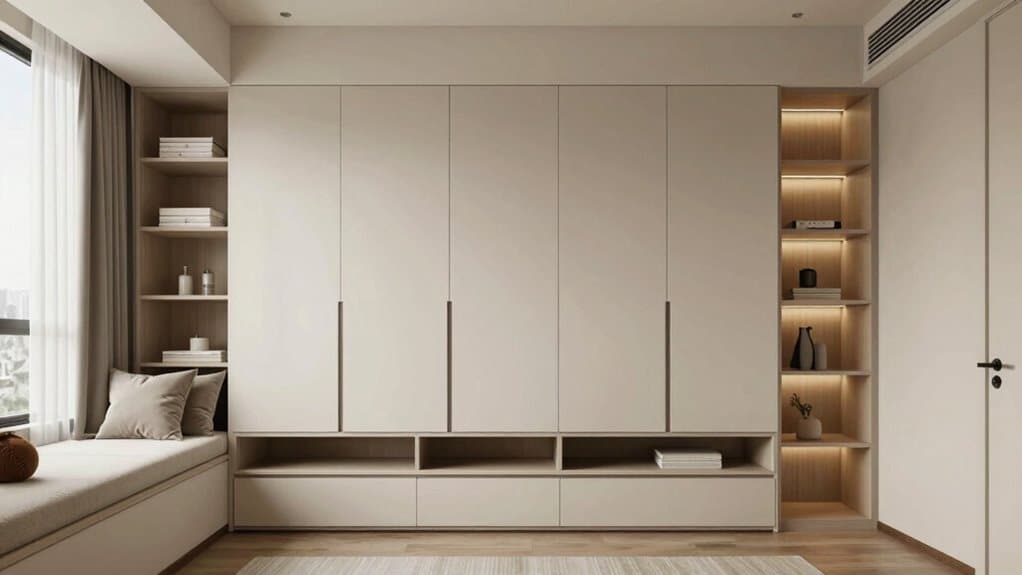
Built-in closet ideas offer smart space optimization, from adjustable shelves to modular organizers that grow with your needs.
Pair these with comfort-boost upgrades like seating nooks, soft lighting, and accessible storage to elevate daily use.
As you plan, consider how built-ins and thoughtful finishes can streamline your routines and reinforce a cohesive bedroom aesthetic.
Built-in Closet Ideas
A built-in closet can transform a bedroom by seamlessly integrating storage with style, providing a cohesive space that feels larger and more organized.
In this section, you’ll explore smart configurations that maximize every inch. Use custom shelving to tailor heights and widths for folded items, accessories, and seasonal gear. Modular systems let you expand or reconfigure without major renovations, ideal for changing needs.
Adjustable racks and hanging solutions keep garments accessible and visible, reducing clutter and making mornings smoother. Drawers with full-extension tracks improve reach, while shallow bins handle small items neatly.
Center shelves, deep drawers, and dedicated hanging sections combine for efficient organization. With thoughtful placement and durable materials, your built-in closet becomes a quiet, functional backbone of room design.
Comfort-Boost Upgrades
A comfortable bedroom starts with how you sleep, and that means prioritizing storage pieces that keep your space neat while also enhancing comfort.
You’ll explore mattress upgrades and cooling bedding to support better rest, while ergonomic accessories ease daily strain.
Multifunctional beds offer storage options and gently integrated tech, blending convenience with calm aesthetics.
Smart tech features, like sleep tracking and built-in USB ports, help you monitor and improve your environment.
- mattress upgrades and surrounding bedding for ideal temperature and support
- cooling bedding that stabilizes comfort through the night
- ergonomic accessories to reduce pressure and improve posture
- multifunctional beds with hidden storage and practical enhancements
- smart tech elements that track sleep and simplify charging
These choices create a balanced, efficient, and restful bedroom upgrade.
General Planning: Budget, Vision, and Permits
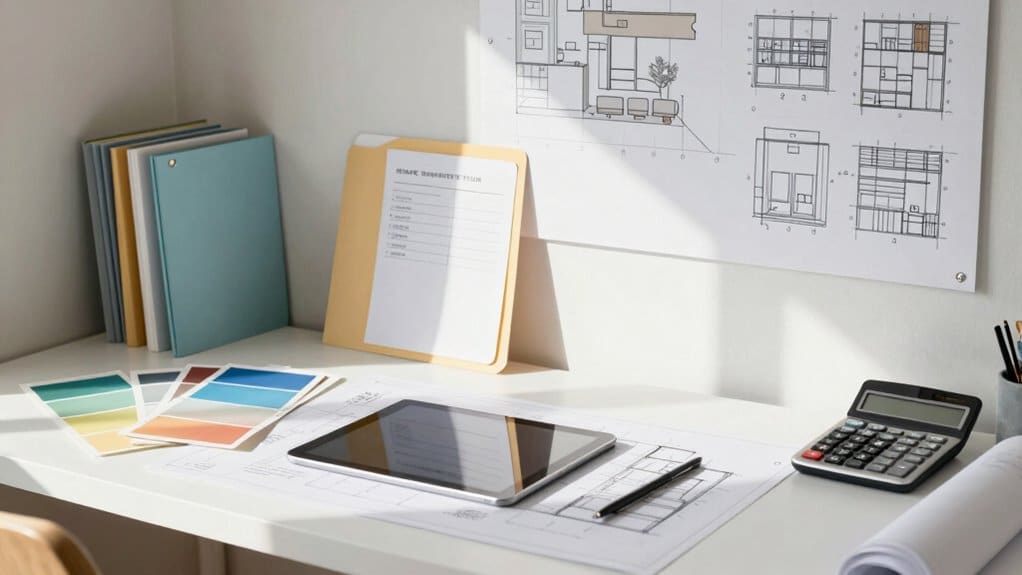
Planning your home remodel starts with a clear map: a realistic budget, a compelling vision, and a solid permit plan. You’ll allocate funds for construction costs, design fees, materials, labor, permits, and a contingency for surprises.
Research local costs and obtain multiple contractor quotes to compare. Include line items for demolition, utilities, structural work, systems, rooms, exterior, interior, site tasks, fixtures, and finishes.
Set a realistic budget reflecting priorities, noting that older couples and families with child safety needs may differ.
Develop a vision alignment by gathering inspiration and defining a finished result that covers permitted, designed, built, purchased, installed, and fitted items.
Hire a designer or architect to translate ideas into actionable plans, ensuring permit requirements and team selection support cohesive project planning.
Construction Phases Overview: Timeline and Milestones
Constructing a remodel follows a logical sequence of phases, each with clear goals, timelines, and milestones. You’ll follow a defined construction timeline, from site prep to final touches, with milestones that mark progress and quality checks.
Phase 1 clears space and establishes a safe workflow, then Phase 2 brings in framing, rough-ins, and inspections. Phase 3 moves drywall and insulation, preparing for finishes, while Phase 4 handles finishes, trim, and cabinetry to transform the space.
Phase 5 wraps up with a punch list, inspections, and final cleanups, confirming code compliance and usability. Expect a total duration of 8–10 weeks, potentially longer with change orders or material delays. Stay proactive, and track milestones to stay on schedule and within budget.
- Site preparation and demolition
- Rough work and mechanics
- Drywalling and insulation
- Finishes, trim, and cabinetry
- Final touches and completion
Room-by-Room Task Prioritization: Essential vs. Wish List
Room-by-room planning helps you separate must-do essentials from nice-to-have upgrades, ensuring your remodel stays focused and on budget.
In the kitchen, prioritize structural integrity, then plumbing and electrical upgrades, followed by countertops, backsplashes, and energy-efficient appliances. These essential features create a solid foundation for future aesthetic enhancements.
For the bathroom, address ventilation, plumbing, and casing for water integrity first, then plan vanity and storage updates, with lighting installed to support safe, daily use.
Living spaces demand a load-bearing assessment and proper HVAC and electrical updates before finishes.
Wrapping It Up
Plan and prioritize room by room, starting with clear goals, a solid budget, and required permits. Keep a practical timeline and check each phase against your vision. For kitchens and baths, lock in layouts, storage, and ventilation; for living spaces and bedrooms, focus on flooring, lighting, and comfort. Use the checklist to distinguish essentials from wish-list items, and stay flexible as you progress. With steady planning, your remodeling project stays orderly and on track.
5 Reasons To Consider a Room Addition For Your House
Room additions have become quite common in the last decade. A typical room addition may entail adding a new bedroom, building a basement or even carving out a new bedroom on the upper floor. Every client has their own reason for seeking a room addition service. But there are a few general ones that could apply to anyone, including you.

- Create extra space for miscellaneous activities
Most modern homes should have one free room designated for miscellaneous activities. We’re talking something other than a closet, home office, play room, mud room, or man cave. Your new miscellaneous room could be a great space for activities such as playing music (piano, drums, guitar, etc), drawing, painting, clay molding, woodwork, yoga, meditation, exercise, or other forms of art.
- Create extra space for the growing family
Many family homes across the US have no extra bedrooms. All the available space is already taken up by the existing family. If you’re a younger family, a room addition is great way to create space for a ballooning family. It is better to carve out such a space now as opposed to later when your family is already large and financially strained. Kids aside, an extra room for hosting visiting guests is not a bad idea at all.
- Host your ageing parents in their retirement years
If you own a home, you have the unique opportunity to host your ageing parents within your home during their retirement years. It’s a win-win of sorts; you get to look after them close by and they get to see their grandchildren every day. All you need for this is to build out a small suite for them, maybe a garage ADU. This is cheaper than building a granny pod.
- Increase the market value of your home
Larger homes sell higher than smaller ones. Adding an extra room to your house could increase its value by about 10%. And it could make the unit more attractive to buyers if you live in an area that is favored by families. And although this is probably not the main reason for sanctioning a room addition, it is a nice bonus benefit that you should know about. So in the end, you do sort of recoup your room addition costs, and then some.
- Collect passive income by renting free space
With uncertain economic times underway, and retirement years coming in the not-too-distant future, securing some passive rental income is a goldmine. And if you have a home, you are already one step closer to making that dream come true. You can convert your garage or basement into an ADU. Or you can build an external housing unit within your compound. With such units fetching decent rental incomes in modern cities such as San Diego, you could rake in a tidy sum every month to go toward your monthly living expenses.
Need room addition or kitchen remodeling services in San Diego? Talk to us at Creative Design & Build for floor plans, building designs, project management, cost analysis, building advice, and more.
5 Reasons Why White Kitchens Are Coming Back
Every now and then there are certain architectural or décor aspects of a build that everyone is either getting or aspiring to get. When it comes to kitchens, white is all the rage right now. A lot of people are raving about white kitchens and can’t wait to have one. For clarity, a white kitchen is one where most of the decor is white. This includes the cabinets and drawers, the countertops, as well as the walls. You may be in the same boat. And if you’re not it helps to know why so many people are drooling for all-white kitchens.
So here’s a quick rundown of some of the perks of having a white kitchen.
White is classic/timeless
White is a classic color when it comes to many things, especially fashion. The same theory applies to kitchens. White kitchens are the same. They have a classic and timeless look that, although they might get overtaken by other trends from time to time, they will always get back in vogue. This makes a white kitchen an easy bet if you want a kitchen that will retain its looks for many years to come without needing another facelift.
White accentuates lighting really well
Another reason why lots of people are in love with white kitchens is lighting. Everyone knows that a kitchen needs to be well lit. Well white kitchens help to bounce the light around thereby keeping the entire space quite well lit. This works with both natural light as well as artificial light (white & warm). The effect is a sparkly kitchen akin to what you may see on a show room/house.
White works well with other décor aspects
When putting together a kitchen you must factor into consideration all the décor aspects involved. For example, you have the floor, the backsplash, the countertops, the lighting fixtures, etc. This might require delicate balancing if your kitchen cabinets, countertops and walls all had different colors. However, with a white kitchen you’re in luck because you have very few other colors to work with. And white works with just about every other color.
White looks clean
The kitchen needs to be the cleanest space around your house because that’s where all your food is prepared from. And it’s not just enough to keep the place clean. It helps if the space looks clean as well. Some colors and shades can easily be mistaken for dirt. And spaces with such colors are a chore to maintain. Luckily, white looks clean just by default. It’s also easy to spot dirt on white surfaces and get rid of it
Simplicity wins
Last but not least, an all-white kitchen embraces simplicity. And there’s something very charming about that. Sure, white kitchens have a very sophisticated look. They look expensive and high-end, which is good. But the concept of an all-white kitchen is quite simple in design terms. And in today’s world where it’s easy to overthink or overcomplicate what you want, simplicity sometimes is usually the answer.
We are kitchen remodeling San Diego experts and we know all about white kitchens. Talk to us about your upcoming remodeling ideas!
The decision to have your home remodeled is a pretty straight one to make. However, choosing the right contractor for the home remodel may not be as simple. Clients get bombarded with hundreds of results upon initiating a simple search on the internet. So how do you choose the right contractor from the hundreds of available firms? We have compiled for you a list of 5 critical questions that you should ask a potential contractor before commencing any repairs or remodeling works.
- How long have you been in the industry?
Practice makes perfect. It is within your right to want to know how long the contractor has been in the industry. Experience, just like in any other work scenario, contributes a lot to the quality of work. A contractor that has been in the industry for at least 10 years has most likely tried all the market trends and innovations in the construction field. Therefore, they are more likely to offer better services compared to younger firms/contractors. Although this is not an exact science, you are better off with a contractor that has more years under their belt.
- Are you licensed?
A home remodel costs money; your hard earned money. So you want to be served by a firm that is legally qualified to offer such services. Most contractors are regulated by the state government. For instance, contractors in California are required to be licensed and registered with the California Department of Consumer Affairs Contractors State License Board. Working with an unlicensed firm could get you on the wrong side of the law. In case of malpractice, your building may face demolition.
- Have you handled such a project before?
Contractors are different. Some specialize in roofing, others in paving, and others in bathroom remodels and so on. Renowned firms have a reliable team of experts that specialize in every project. Be keen to ask if they have undertaken a similar project in the past. A confident contractor will give you a detailed response on their procedures. You can also insist on viewing their portfolio of previous projects just to be sure.
- What ideas can improve my project?
You hire contractors because they have the technical knowhow of what works and what doesn’t. A good contractor shall provide you with specific details concerning ways of improving your project or why they prefer a certain material to another. For instance, a contractor seeking to undertake a kitchen remodel should advise you on the different kitchen layouts that work for your space. A contractor that refrains from giving you their professional input is a red flag.
- Do you have any references that may vouch for you?
Good work speaks for itself. Satisfied clients like recommending a good firm to others. Dissatisfied clients, too, are sure to voice their complaints. Asking for references gives you an insight of what others think about the contractor’s services. You can view these from testimonials on their website, or independent and trusted reviewers such as Yelp or Home Advisor.