


Begin with a clear plan and budget, then secure permits. Start room by room: in the kitchen, check layout, storage, and finishes; in the bathroom, verify plumbing, fixtures, and ventilation; in the living areas, inspect flooring, lighting, and any needed structural checks; in the bedroom, plan storage and comfort upgrades. Develop a realistic timeline and milestones, and gather multiple contractor quotes. Stay organized with a phased approach, tracking progress and potential delays. If you keep going, you’ll gain practical steps to apply.
Kitchen: Assessing Layout, Storage, and Finishes
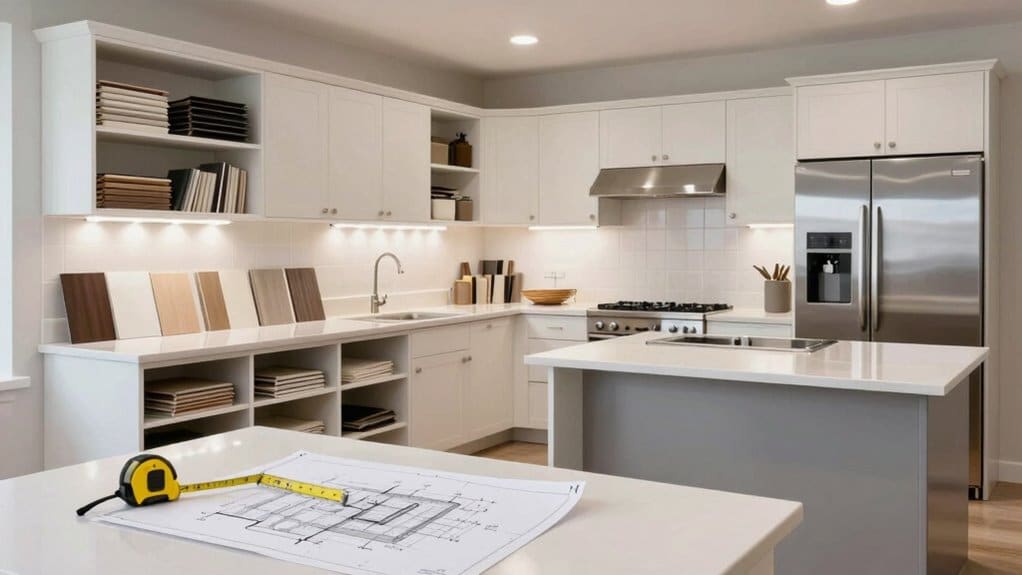
Evaluating your kitchen’s layout, storage, and finishes begins with a clear view of how you move through the space each day.
You’ll assess the current layout for workflow efficiency, spotting traffic bottlenecks and awkward movements that slow you down. Note daily challenges like limited counter space and how you place appliances, since space utilization matters from storage to function.
Consider that nearly half of homeowners reconstruct their layouts, using this as motivation to plan thoughtfully.
Nearly half update their layouts, turning ambition into thoughtful, practical kitchens.
For storage solutions, check existing setups for pots, pans, and utensils, and identify clutter hotspots and underutilized corners.
Prioritize pull-out pantry shelves and custom cabinetry, allocating substantial attention to sleek, soft-close cabinets that blend with durable finishes. This sets a solid foundation for a balanced, practical kitchen, making it essential to evaluate your kitchen’s layout and how it impacts overall functionality.
Bathroom: Plumbing, Fixtures, and Ventilation Needs
You’ll start by checking plumbing integrity, ensuring pipes and connections are age-appropriate and free of corrosion.
Next, you’ll consider fixture efficiency, selecting low-flow options and WaterSense-certified components to save water without sacrificing performance.
Finally, you’ll verify ventilation essentials, confirming proper venting and airflow to prevent sewer gas and maintain a healthy bathroom environment. Additionally, it's wise to inspect kitchen drain systems regularly to prevent future plumbing issues that could affect the bathroom.
Plumbing Integrity
Plumbing integrity in a bathroom project means guaranteeing every valve, drain, vent, and connection works together reliably.
You’ll verify accessibility for toilet, sink, and shower valves, test their functionality, and replace corroded parts when needed.
Install missing shut-off valves to enable quick curb-side shutoffs during future repairs, and confirm valves operate without leaks when turned.
For drain-line sizing, measure pipe diameter for sinks, showers, and tubs, and consider upsizing a shower drain if you’re adding multiple heads or a rain shower.
Ascertain drains stay clog-free after installation and keep gutters unobstructed during final checks.
Proper-venting remains essential; confirm vents on all fixtures, add vents for relocated or new fixtures, and address slow drains or odors.
Leak-detection testing seals the approach with confidence. Additionally, ensure all plumbing works comply with local plumbing codes to avoid future issues.
Fixture Efficiency
Fixture efficiency in a bathroom blends water savings with reliable performance, so you get comfort without waste.
You’ll prioritize water saving faucets that keep strong flow while cutting usage, and you’ll look for WaterSense labels to verify efficiency.
Choose functional options like single-handle or double-handle models in chrome or brushed nickel, with hands-free convenience from motion-activated designs.
Pair faucets with compatible sinks—undermount, vessel, or pedestal—for a cohesive look and easier cleaning.
For toilets, select efficient toilets with EPA WaterSense labeling to balance flush performance and water use, including comfortable heights and both one-piece and two-piece configurations.
Smart options exist, yet still focus on reliability; prioritize smooth installation and straightforward maintenance.
This approach supports responsible, stylish bathroom updates.
Ventilation Essentials
Ventilation plays a key role in bathroom comfort and health, especially after upgrading fixtures and selecting water-saving options. You’ll evaluate ventilation types to guarantee effective moisture control and odor management.
For small bathrooms, aim for 50 CFM, while larger spaces require 100 CFM or more or follow 1 CFM per square foot up to 100 square feet, then base on fixtures beyond that.
Place exhaust fans near the shower or tub, with a secondary vent near the toilet in larger rooms. Use smooth, insulated ducts and vent directly outside to maximize efficiency.
Compliance matters: mechanical ventilation is mandatory in windowless baths, and recirculation is prohibited. Combine fans with operable windows when possible, and verify local codes and HVI ratings for performance.
Living Room: Flooring, Lighting, and Structural Checks
Kicking off the Living Room remodel, start with a clear plan for flooring, lighting, and structural checks to form a solid foundation for everything that follows.
You’ll inspect the subfloor after clearing furniture, then remove old materials and check for damage, moisture, or unevenness. Choose durable options like laminate, engineered wood, or tile, ensuring proper installation aligns with design goals and room traffic, preserving living room flooring longevity.
For lighting, evaluate wiring, outlets, and fixtures for code compliance, then add task lighting and recessed fixtures while maximizing natural light with window upgrades.
Concerning structural checks, identify load-bearing walls, assess built-ins or fireplaces, and confirm mold or pest risks are addressed.
Concerning structural checks, identify load-bearing walls, assess built-ins or fireplaces, and confirm mold or pest risks are addressed.
Prioritize structural integrity to support future cosmetic updates and maintain design alignment throughout the project.
Bedroom: Storage Solutions and Comfort Upgrades
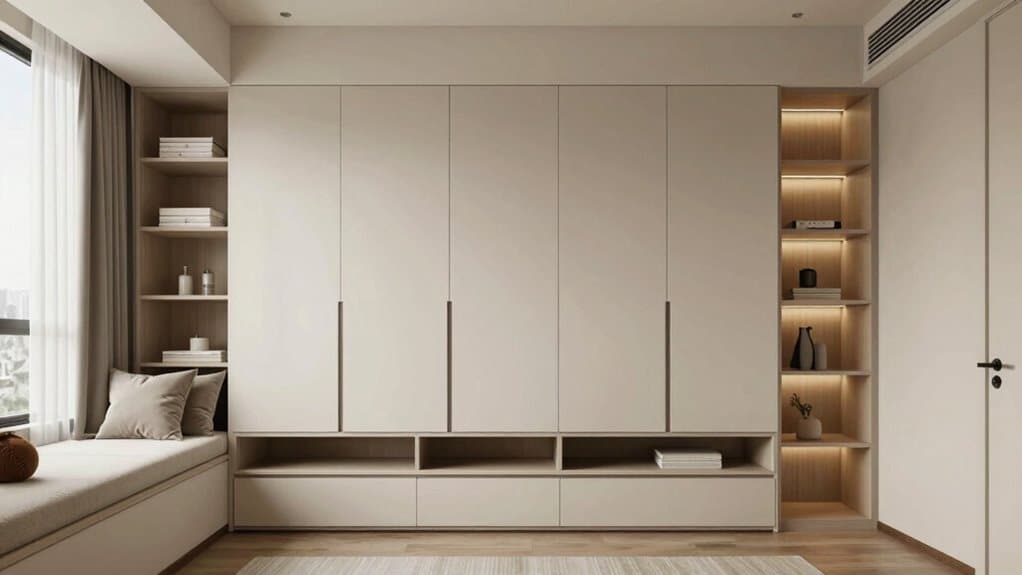
Built-in closet ideas offer smart space optimization, from adjustable shelves to modular organizers that grow with your needs.
Pair these with comfort-boost upgrades like seating nooks, soft lighting, and accessible storage to elevate daily use.
As you plan, consider how built-ins and thoughtful finishes can streamline your routines and reinforce a cohesive bedroom aesthetic.
Built-in Closet Ideas
A built-in closet can transform a bedroom by seamlessly integrating storage with style, providing a cohesive space that feels larger and more organized.
In this section, you’ll explore smart configurations that maximize every inch. Use custom shelving to tailor heights and widths for folded items, accessories, and seasonal gear. Modular systems let you expand or reconfigure without major renovations, ideal for changing needs.
Adjustable racks and hanging solutions keep garments accessible and visible, reducing clutter and making mornings smoother. Drawers with full-extension tracks improve reach, while shallow bins handle small items neatly.
Center shelves, deep drawers, and dedicated hanging sections combine for efficient organization. With thoughtful placement and durable materials, your built-in closet becomes a quiet, functional backbone of room design.
Comfort-Boost Upgrades
A comfortable bedroom starts with how you sleep, and that means prioritizing storage pieces that keep your space neat while also enhancing comfort.
You’ll explore mattress upgrades and cooling bedding to support better rest, while ergonomic accessories ease daily strain.
Multifunctional beds offer storage options and gently integrated tech, blending convenience with calm aesthetics.
Smart tech features, like sleep tracking and built-in USB ports, help you monitor and improve your environment.
- mattress upgrades and surrounding bedding for ideal temperature and support
- cooling bedding that stabilizes comfort through the night
- ergonomic accessories to reduce pressure and improve posture
- multifunctional beds with hidden storage and practical enhancements
- smart tech elements that track sleep and simplify charging
These choices create a balanced, efficient, and restful bedroom upgrade.
General Planning: Budget, Vision, and Permits
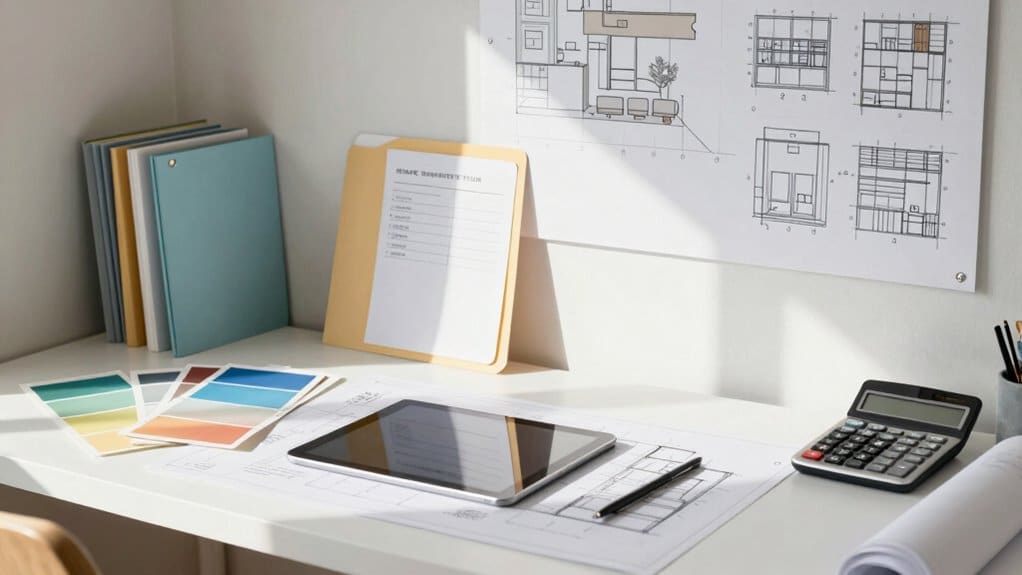
Planning your home remodel starts with a clear map: a realistic budget, a compelling vision, and a solid permit plan. You’ll allocate funds for construction costs, design fees, materials, labor, permits, and a contingency for surprises.
Research local costs and obtain multiple contractor quotes to compare. Include line items for demolition, utilities, structural work, systems, rooms, exterior, interior, site tasks, fixtures, and finishes.
Set a realistic budget reflecting priorities, noting that older couples and families with child safety needs may differ.
Develop a vision alignment by gathering inspiration and defining a finished result that covers permitted, designed, built, purchased, installed, and fitted items.
Hire a designer or architect to translate ideas into actionable plans, ensuring permit requirements and team selection support cohesive project planning.
Construction Phases Overview: Timeline and Milestones
Constructing a remodel follows a logical sequence of phases, each with clear goals, timelines, and milestones. You’ll follow a defined construction timeline, from site prep to final touches, with milestones that mark progress and quality checks.
Phase 1 clears space and establishes a safe workflow, then Phase 2 brings in framing, rough-ins, and inspections. Phase 3 moves drywall and insulation, preparing for finishes, while Phase 4 handles finishes, trim, and cabinetry to transform the space.
Phase 5 wraps up with a punch list, inspections, and final cleanups, confirming code compliance and usability. Expect a total duration of 8–10 weeks, potentially longer with change orders or material delays. Stay proactive, and track milestones to stay on schedule and within budget.
- Site preparation and demolition
- Rough work and mechanics
- Drywalling and insulation
- Finishes, trim, and cabinetry
- Final touches and completion
Room-by-Room Task Prioritization: Essential vs. Wish List
Room-by-room planning helps you separate must-do essentials from nice-to-have upgrades, ensuring your remodel stays focused and on budget.
In the kitchen, prioritize structural integrity, then plumbing and electrical upgrades, followed by countertops, backsplashes, and energy-efficient appliances. These essential features create a solid foundation for future aesthetic enhancements.
For the bathroom, address ventilation, plumbing, and casing for water integrity first, then plan vanity and storage updates, with lighting installed to support safe, daily use.
Living spaces demand a load-bearing assessment and proper HVAC and electrical updates before finishes.
Wrapping It Up
Plan and prioritize room by room, starting with clear goals, a solid budget, and required permits. Keep a practical timeline and check each phase against your vision. For kitchens and baths, lock in layouts, storage, and ventilation; for living spaces and bedrooms, focus on flooring, lighting, and comfort. Use the checklist to distinguish essentials from wish-list items, and stay flexible as you progress. With steady planning, your remodeling project stays orderly and on track.


