


Featured image: AI-generated kitchen design concept; not a completed Creative Design and Build project.
Induction cooktops are a strong choice if you want responsive heat, efficient cooking and a smooth surface to clean. Gas suits cooks who value a visible flame and cookware flexibility. For a kitchen remodel, choose the exact appliance only after checking how you cook and how that model fits the planned installation.
The expensive mistake is letting an appliance preference become a countertop cutout before the team has reviewed it. A nominally similar replacement can change the cabinet, electrical supply or hood plan. This induction vs. gas cooktop guide helps San Diego homeowners make those decisions in order, then record them on a before-ordering approval sheet.
Induction cooktops vs. gas: compare cooking performance
An induction cooktop uses an electromagnetic field to generate heat within compatible cookware. A gas cooktop burns fuel at the burner, heating the pan with a flame. Both can support serious home cooking; compare the particular models rather than assuming one fuel guarantees better results.
This article focuses on a separate cooktop installed in a counter. An induction range or gas range combines surface cooking with an oven. If you are replacing a whole stove, review that complete appliance’s requirements; a cooktop specification is not a substitute.
Also distinguish induction from a radiant electric cooktop. A glass top alone does not identify the heating technology: radiant elements heat beneath the glass, while induction needs a compatible pan to generate heat in the cookware. Confirm which technology you are comparing on the product specification.
Speed, simmering and temperature control
Induction can bring water to a boil faster than gas and responds promptly when you change the setting. Gas gives immediate visual feedback as you adjust the gas flame. Neither advantage tells you whether a particular model will hold your smallest saucepan at the gentle simmer you want.
Ask for a demonstration using a normal meal sequence: boil pasta water, reduce a sauce and heat a skillet. Notice how easily you select a zone, lower the heat and turn everything off. Compare usable controls and low settings, not just the highest advertised output. Faster cooking times are useful only if the cooking experience also suits your routine.
Pan movement and cooking style
If your cooking style depends on a traditional gas burner or a round-bottom wok, put that requirement on the shortlist before shopping. A standard flat induction surface needs suitable cookware and positioning; ask about the exact model and supported accessories rather than assuming a familiar technique will transfer unchanged.
For a household that mostly boils, sautés and simmers in flat-bottom pans, a cooking demonstration may settle more than a showroom discussion about what chefs prefer. Write down your three most frequent meals. Those cooking needs should drive the comparison.
Which cookware will work on an induction cooktop?
Start with the pots and pans you actually use. ENERGY STAR’s electric cooking guidance explains induction’s magnetic cookware requirement and suggests a magnet check. Cast iron and some stainless steel pans may already be suitable; the material name alone does not establish that every pan in a set will work.
Use the magnet as an initial screen, then check the appliance manual for pan base, size and placement requirements. A small pot that works on one induction burner may not be recognized on another zone. Identify essential pieces that need replacing before treating new cookware as an unexpected installation expense.
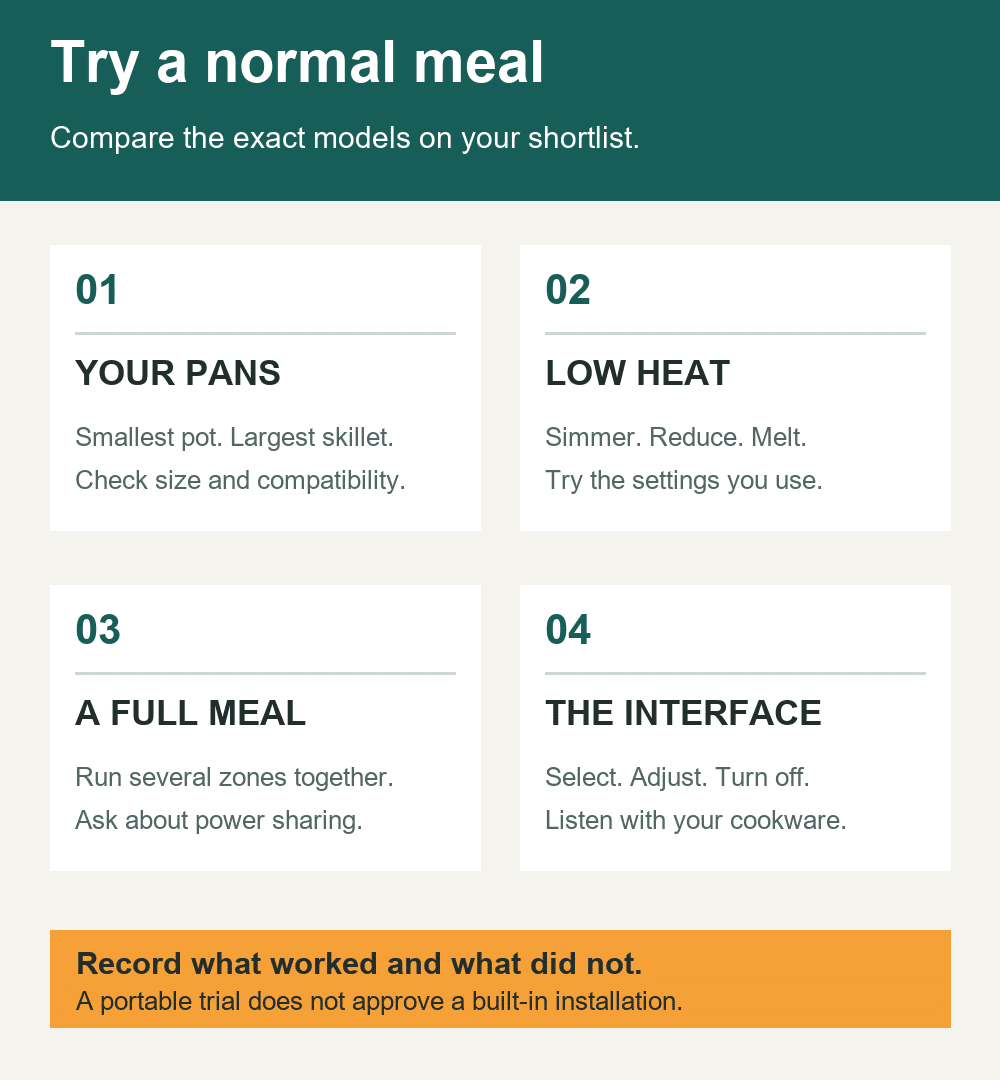
Use these four checks to decide between the two finalists:
- Everyday pans: check your smallest pot, largest skillet and any griddle against the manufacturer’s instructions.
- Low heat: observe the setting changes and simmer behavior you need for sauces or melting.
- A full meal: ask what happens when several zones run together. Some induction models share power during boost; confirm the particular limits rather than judging the whole cooktop from one boiling test.
- Controls and sound: try the interface and listen with your cookware. Humming, buzzing or fan sound can vary with the pan, setting and model.
If you have never used induction, a properly used portable unit can help you explore the feel of induction cooking. It cannot prove a built-in model’s output, controls, fit or circuit requirements. Do not approve the permanent installation from that trial alone.
Cleaning and residual heat
A smooth glass surface is generally easy to clean compared to lifting a gas grate and cleaning around burner parts. Follow the manual’s cleaning method for a spill or grease splatter, and avoid dragging heavy cookware across glass. Neither material is maintenance-free.
Induction has no open flame, but a hot pan transfers heat back into the cooking surface. Do not assume it stays cool to the touch. KitchenAid’s residual-heat explanation describes why a zone can remain hot after use. Check the selected appliance’s indicators and control lock, and keep normal hot-pan precautions with either type of cooktop.
Induction cooktop or gas: approve installation and fit
“Both are 30 inches” is not installation approval. Nominal width does not establish the required cutout, depth below the counter, clearances or compatible oven underneath. GE Appliances’ cooktop buying guide specifically directs buyers to exact cutout instructions and approved cooktop/oven pairings.
For a like-size replacement, have the team measure the existing opening and compare it with the selected model’s installation documents. An opening that is too large is a different problem from one that can be enlarged. Ask the countertop specialist how either condition would be addressed before buying the appliance.
Does an induction cooktop need a panel upgrade?
A panel upgrade is not automatic. Ask a licensed electrician to review the exact model’s voltage, circuit and connection requirements against the home’s existing supply and planned loads. Available breaker space alone is not a complete capacity assessment.
Have the electrician identify the required work: a suitable existing circuit, a new circuit route, changes to the panel or service if necessary, and any access or wall repairs. Keep the oven and other planned electrical additions in that review. Replacing an old electric cooktop also requires checking the new model; an existing connection is not proof of compatibility.
Switching from gas to induction: what changes?
When moving from gas to induction, include professional disconnection and treatment of the unused gas connection in the scope. If retaining gas, confirm whether the selected appliance is configured for natural gas or propane and what supply work is needed. Gas cooktops can also have electrical requirements for ignition or controls.
Do not select a gas stove solely as a power-outage solution. Operation during an outage depends on the model and its instructions. Have a qualified installer verify the selected appliance rather than assuming every gas unit can be operated without electricity.
Coordinate everything above and below the cooktop
Give the cabinet supplier, countertop fabricator and installers the same dated model documents. Review drawer space, undercounter oven compatibility, service access, required clearances and the hood location together. A last-minute model substitution should reopen those checks before fabrication proceeds.
If the cooktop is moving to an island, resolve the appliance and hood arrangement as part of the layout. Our open-concept kitchen design guide covers the broader room plan; this approval step focuses on whether the selected equipment can be installed within it.
Induction and gas both need a ventilation plan
Switching fuel does not remove the smoke, particles and odors generated by cooking food. The EPA’s guidance on cooking particles recommends using a range hood whenever you cook and favors exhaust to the outdoors over recirculation.
Ask the project team to review the hood, capture area, installation height, duct route and discharge location for the planned appliance and applicable project requirements. Confirm how the system will be used, cleaned and serviced. A decorative hood drawing does not establish an exhaust path, and an existing vent should not be assumed suitable without review.
Include noise in that conversation: a hood you are comfortable running during everyday cooking is part of a useful design. Keep this decision in the appliance approval record for either fuel type, rather than deleting the hood allowance when you choose induction.
Gas vs. induction: installation costs and running costs
There is no reliable total-cost answer based only on “gas or induction.” Compare two named models and written installation scopes. A lower appliance price can be outweighed by work needed to fit it; an induction cooktop may be straightforward where a suitable electrical supply already exists.
Ask each proposal to identify these items:
- Appliance, delivery, installation and removal.
- Electrical assessment and specified circuit, panel or service work.
- Gas connection, modification or disconnection work, where applicable.
- Hood and duct changes, cabinetry, countertop work and finish repairs.
- Essential cookware replacements and any project-specific permit or inspection allowances.
Have the contractor identify the applicable approvals for your actual San Diego address and scope. This list is a way to compare proposals, not a claim that every item is required. For the surrounding renovation budget, use our San Diego kitchen remodel cost guide.
Energy efficiency is a separate question from utility dollars. Induction transfers a greater share of its heating energy into cookware compared to gas. That does not establish what you will pay: running costs also depend on local electricity and gas rates, cooking habits and the actual equipment. Do not assume a switch will save you money or eliminate a gas account if other gas appliances remain.
For a fair estimate, ask for the assumed energy use and applicable rates behind any claimed savings. Compare those operating estimates separately from the one-time remodeling work. Avoid using an efficiency percentage as though it were the same percentage reduction in your household bill.
The before-ordering cooktop approval sheet
Keep one shared record with the appliance selection and project drawings. Give every unresolved item a named reviewer and a decision date. “Pending” should remain visible until the responsible person confirms it; a salesperson’s quote alone does not approve the whole installation.
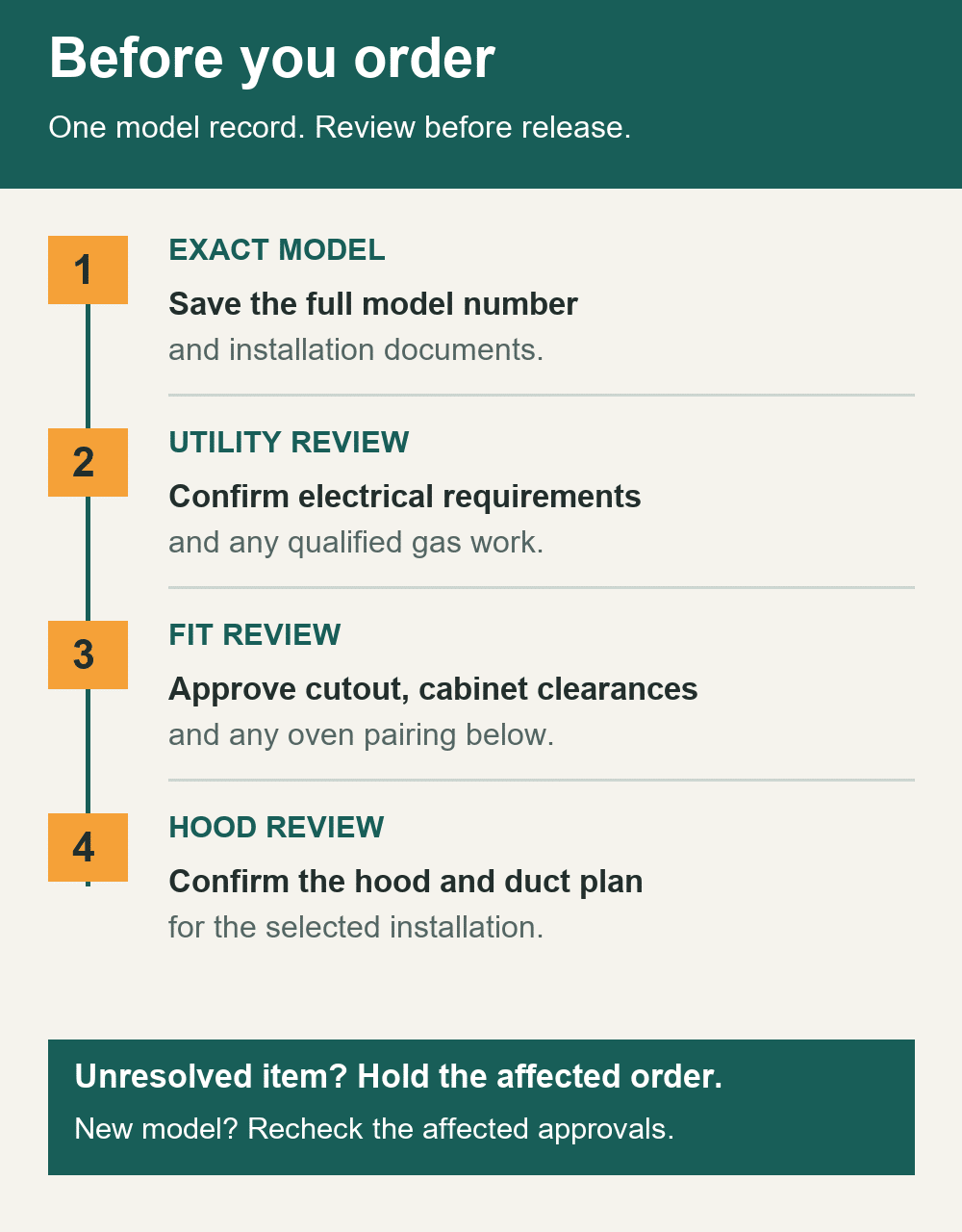
- Selection: manufacturer, full model number, installation-document version, availability and substitution policy.
- Cooking trial: cookware to keep or replace, control preferences and any limits found during the demonstration.
- Utilities: electrician’s required-work assessment and qualified installer’s gas scope, if applicable.
- Fit: cutout and cabinet review, clearances, approved undercounter appliance pairing and the fabricator’s confirmation.
- Ventilation: selected hood, duct arrangement and the person confirming the coordinated plan.
- Release: unresolved questions, responsible reviewers and dated authorization before appliance ordering, cabinet release or countertop fabrication, as appropriate to the project.
A pending item should stop the affected order
For example, imagine a homeowner chooses a new induction top and wants to retain the oven below it. The cookware trial is satisfactory and the electrical scope is documented, but the exact oven pairing remains unconfirmed. Record: “Fit review pending—installer to confirm approved pairing; hold cabinet and countertop release.”
This is a hypothetical coordination example, not a completed project. Once the pairing is confirmed or the selection changes, update the model record and obtain the affected approvals. Do not erase the open question just because the appliance is on sale.
Choose gas or induction, then coordinate the kitchen
Choose induction if its controls, compatible pans and cooking response suit you and the installation review supports it. Choose gas if flame cooking remains a priority and its supply, fit and ventilation requirements are addressed. The useful final decision is a named model with an agreed installation scope.
Creative Design and Build’s kitchen remodeling services bring the appliance decision into the surrounding design and construction discussion. Bring your current appliance details, model shortlist, everyday cookware list and photographs of the layout when you request a kitchen remodel consultation. The next step is to resolve what the selection changes before orders and fabrication lock it in.


