


Garage conversions convert your existing garage into usable space at a lower cost and with quicker timelines, while detached ADUs add privacy and independent living space but at higher upfront investment. Pros include better yard use for conversions, and rental income for ADUs; cons cover limited layout in conversions and greater permitting for ADUs. Costs vary widely—$10k–$150k for conversions vs $100k–$300k for detached units—plus permitting needs. If you want more details, you’ll gain clearer guidance as you explore options.
Garage Conversion: Overview and Key Benefits
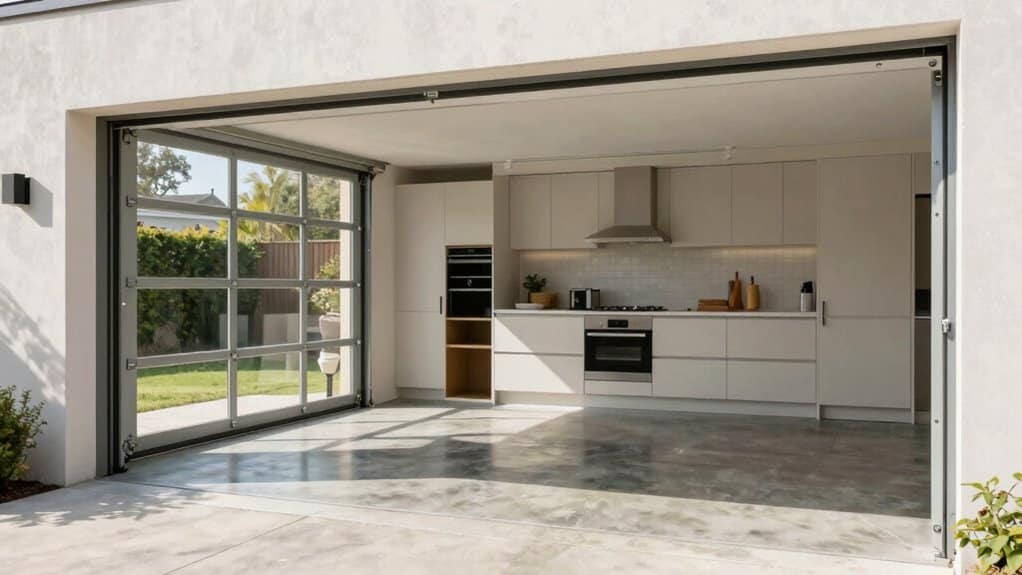
A garage conversion transforms an underused space into valuable living square footage without the upheaval of a full home addition. You repurpose the existing structure to create an extra bedroom, home office, guest suite, or playroom, adding usable space without sacrificing outdoor yard area. The conversion process integrates proper insulation and heating, enabling seamless connection with the rest of your home. It’s considerably more affordable than traditional extensions, since the basic structure is already in place, reducing labor and materials. This approach delivers strong return on investment and can increase resale value by 10-20% when done well. Design options let you tailor layouts, windows, and finishes to fit your needs while maximizing comfort and storage potential. For those considering such projects, hiring a professional contractor ensures a successful remodel tailored to your specific needs.
Detached ADU: Overview and Key Benefits
Detached ADUs offer notable space and privacy you’ll appreciate, with a separate entrance and living areas that keep you autonomous from the main home. They also deliver a strong ROI by boosting rental income and property value, while providing flexible options for multigenerational living or caregiver housing. In short, you gain a private, efficient micro-housing solution that can enhance your property's financial and functional appeal. Additionally, ADUs boost market appeal by appraising 20-30% higher than homes without them, making them a smart investment choice in competitive markets.
Key Benefits Overview
Detached ADUs offer distinctive advantages that make them a compelling option for homeowners. You get design flexibility from ground up, tailoring layouts to fit modern studios or cozy cottages. Separate structures let you choose unique styles and materials without the constraints of existing buildings, supporting a standalone design that appeals to independent living. You’ll find greater architectural variety compared to attached or converted spaces, with flexibility in size typically 600-1,000 square feet for smaller households. These units also boost property value by adding usable living space and offering rental income, which helps cover mortgage or expenses. They support multigenerational living, aging in place, and a steady income stream, aligning with design trends and homeowner preferences. Additionally, Creative Design and Build Inc. ensures that the ADUs are crafted with high-quality materials and modern construction techniques for durability and energy efficiency.
Space and Privacy Value
Space and privacy come into sharper focus with a detached ADU, as its standalone nature preserves your main home's flow while offering a separate living space.
This setup supports space optimization by using a compact footprint and efficient layouts, letting you maximize backyard potential without overwhelming the property. Built-in storage and a smaller kitchen and bathroom minimize footprint while preserving usability.
The standalone structure provides complete separation from the main house, delivering strong privacy enhancement for renters, guests, or a dedicated home office or studio. A dedicated entrance and facilities help maintain autonomy and reduce family distractions, improving focus.
Seamless integration with gardens and patios preserves outdoor flow, while flexible zoning accommodates irregular lots and setbacks for harmonious living. Tailored ADU Solutions ensure that the designs align with the homeowner's vision and maximize property potential.
Financially Strong ROI
Financially strong ROI for a detached ADU hinges on a blend of upfront cost efficiency, solid rental demand, and favorable tax incentives.
You can expect robust returns across options, from budget modular ADUs at 13.4% annual ROI to mid-range setups near 10.1%.
Rental income varies by market, with Seattle, San Diego, and Florida examples showing compelling cash flow, even after costs.
Property value appreciation supplements income, as ADUs can boost resale values and overall home worth.
Construction costs range widely, but modular builds offer faster timelines and reduced on-site work, improving financial forecasting.
Consider investment strategies that combine rent, tax benefits, and potential appreciation.
Use careful budgeting, track performance, and align ADU goals with long‑term financial objectives.
A detached ADU can enhance the overall charm of Santee community by integrating seamlessly with existing homes and boosting property value.
Cost Comparison: Garage Conversion Vs Detached ADU
When evaluating costs, a garage conversion typically costs far less upfront than building a detached ADU, but the exact figure depends on the existing structure and required upgrades.
You’ll see lower initial costs because you’re using the current space, yet older garages may need wiring, plumbing, or roof work. A garage conversion can range roughly from $10,000 to $150,000, depending on scope, with a two-car option hitting around $120,000.
A detached ADU starts higher, often $100,000 to $300,000, due to new foundations and full utilities. Consider cost factors like site work, materials, and labor, which drive totals.
With respect to rental income, expect about $1,000–$1,800 monthly for conversions and roughly $1,600–$2,500 for detached units, influencing overall ROI and timelines.
Permits and Approvals: Garage Vs Detached ADU
Permits and approvals for garage conversions and detached ADUs require careful navigation through local and state rules, and getting this right sets the project up for smoother construction.
You’ll face permit requirements that cover building, electrical, plumbing, and mechanical work, plus zoning approvals to confirm eligibility.
Application processes demand complete design plans, site surveys, and compliance documentation before submission.
Detached ADUs often require extra reviews, like site plans and fire-safety or historical permits, which can extend timelines.
Both paths rely on state licenses and local approvals to move forward confidently.
In some areas, fast-track options exist for garage conversions, while other jurisdictions maintain stricter limitations.
- permit requirements and application processes for both options
- evidence of zoning compliance and site plan requirements
- review timelines and resubmission steps
- differences in California, New York, and city-level rules
Layout, Space, and Privacy Considerations
Garage conversions and detached ADUs differ not just in structure, but in how layout, space, and privacy flow into daily living.
You’ll feel layout flexibility limited in a garage due to fixed walls, roof, and foundational elements that cap usable space.
With a detached ADU, you gain design freedom, including one or two bedrooms and customizable ceilings, windows, and lighting, boosting space optimization.
With a detached ADU, you gain design freedom and optimized space.
Privacy concerns are more pronounced in a conversion because of shared walls with the main home, whereas a detached unit offers independent entry and complete separation.
Consider utility access: garage conversions leverage existing connections, while detached ADUs require new hookups.
Outdoor integration matters too, as garage conversions preserve yard space, while detached structures reshape landscaping and setbacks.
ADUs provide flexible living solutions for family members or tenants and often yield a higher ROI compared to traditional additions.
ROI and Long-Term Value
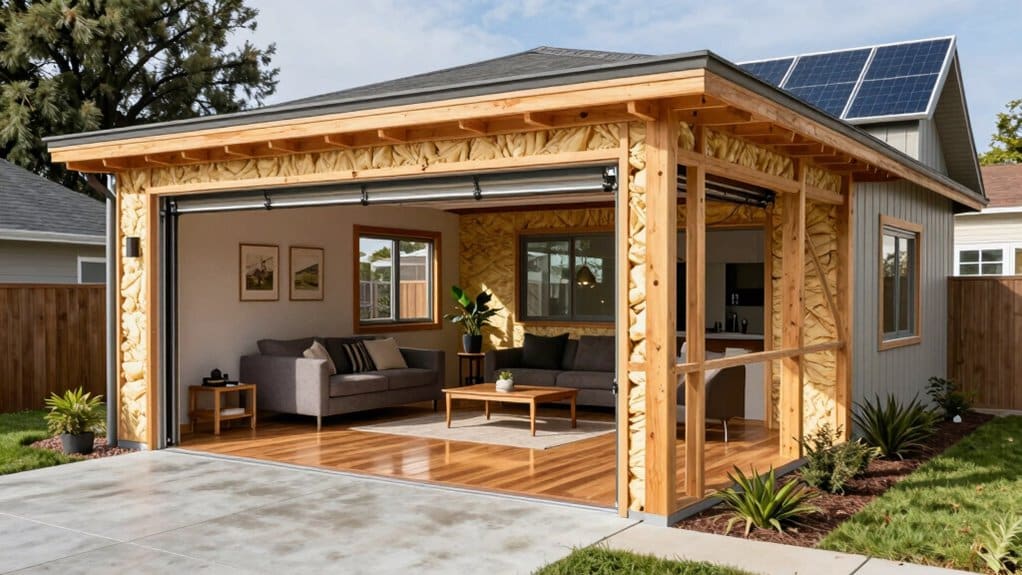
ROI and long-term value aren’t just about upfront costs—they hinge on steady rent, appreciation, and ongoing maintenance. You’ll see garage conversions typically offer strong ROI with lower initial capital, while detached ADUs can yield higher returns but require more investment; the key is balancing cash flow with potential property value growth. As you compare, consider long-term trends in value appreciation and how annual operating costs affect your net gains. Additionally, ADUs can increase property value by 20-30%, providing significant financial benefits in the right markets.
Long-Term ROI Trends
Long-term ROI from garage conversions and detached ADUs shows strong potential, with both paths delivering meaningful value over time. You’ll see steady equity growth as functional spaces add resale appeal, especially when finishes and utilities are well executed.
Market Trends influence ROI, while smart Investment Strategies help you maximize returns through durable design and efficient costs. Over time, conversions tend to maintain higher percentage recoveries than broader home additions, yet ADUs offer sizable absolute value gains via rental income and increased property value in active markets.
- Market Trends shape long-term value, with location and demand driving appreciation and rent potential
- Investment Strategies emphasize quality finishes, efficient workflows, and cost control
- Rental income from ADUs supports ongoing returns alongside resale gains
- Equity accumulation benefits from usable square footage and strategic upgrades
Value Growth Impact
Value growth from home improvements hinges on how you manage both cost and market demand.
When you compare garage conversions to detached ADUs, you’ll notice different value growth paths. Garage conversions typically deliver value appreciation in the 20-30% range, with a $80,000-$180,000 addition common for many homes.
In high-demand markets, both options show 20-30% value rises, but detached ADUs can push toward the upper end, sometimes 25% or more, and even higher appraisals in sizable lots.
ROI remains strong: conversions often yield 70-80% with solid cash-on-cash returns, while detached ADUs commonly reach 70-80% cost recouped in value per NAHB data.
Ultimately, garage conversions usually pay back faster, 3-6 years, whereas detached ADUs trend toward 4-7 years, guided by market demand and cost.
Practical Decision Guide: Which Option Fits Your Property
Considering whether to convert a garage or build a detached ADU hinges on your property’s size, budget, and long-term goals, and the choice can greatly shape how you use your yard and home.
Your decision hinges on property size and zoning regulations, as they determine footprint, setbacks, and allowable square footage. If you have a small lot, a garage conversion keeps yard space intact and speeds permitting. A larger lot offers more flexibility for a detached ADU, preserving green space yet requiring careful planning.
Budget timing also matters: garage projects cost less and finish faster, while detached ADUs demand more time and capital but can yield higher rental returns. Consider long-term value, privacy, and how neighbors view each option.
- Assess property size and zoning regulations to identify feasible footprints
- Compare costs, permitting timelines, and potential revenue
- Weigh impact on yard, privacy, and future resale value
- Align choice with long-term lifestyle and goals
Wrapping It Up
If you’re choosing between a garage conversion and a detached ADU, weigh cost, permits, and space first. A conversion is cheaper and quicker but uses your existing footprint and may limit exterior access. A detached ADU offers privacy and flexibility, with higher upfront costs and longer approvals. Consider your property’s lot, zoning, and long-term plans. Use this guide to balance budget, lifestyle needs, and value—making a well-informed decision that enhances livability and resale potential.


