


Structural engineer review is required whenever your project presents significant risk, complex design, or regulatory thresholds that trigger independent checks. You’ll need peer reviews in certain jurisdictions, and independent design reviews for seismic or performance-based work. Foundations, lateral load paths, and superstructure connections must be verified for safety and code compliance. Licensing and professional responsibility matter, with proper documentation and qualified supervision. If you keep exploring, you’ll gain clearer steps for ensuring a compliant, durable structure.
Peer Review Mandates Across Jurisdictions

Peer review requirements vary widely by jurisdiction, and understanding these differences helps you plan safer, compliant projects.
Across Massachusetts, Connecticut, California, and Chicago, rules hinge on height, area, occupancy, and code compliance, creating distinct pathways for review. You’ll notice jurisdictional differences: some mandates arise from state codes, others from city or county policy, and a few invite voluntary participation to speed permits.
Design complexities grow where thresholds push structures into mandatory evaluation, or where owner-selected reviewers bring specialized expertise. In California, a licensed structural engineer must review construction documents, while Chicago offers optional peer review to accelerate approvals.
This mosaic means you must anticipate who reviews your plan, what they assess, and how findings affect timelines and safety. The core goal remains robust, code-aligned designs.
Projects Requiring Independent Design Review
Independent design review is triggered by specific seismic and performance criteria throughout a project, so you’ll want to identify early which rules apply to your scope.
If your plan includes base isolation, viscous damping, or nonlinear response history analyses, independent review is likely required to verify safety and reliability.
You’ll also need to reflect on performance-based approaches and site-specific geotechnical conditions, as these factors can mandate peer evaluation to guarantee robust design outcomes.
Independent Review Triggers
Independent Design Review is triggered when a project meets specific complexity and risk criteria that warrant an objective design check.
You’ll see independent assessments come into play when building complexity crosses defined thresholds, aligning with the Australian Building Codes Board’s view of how complex a project is.
Location matters, too: being in a natural disaster-prone area counts as one criterion, so Darwin projects gain an added trigger, and a single complexity element can push a review.
Public risk, design complexity, and innovative design types all inform the trigger, ensuring the review addresses potential critiques or deficiencies before issuance.
You’ll work with reviewers who maintain independence, objectivity, and clear communication throughout the process.
Seismic Design Necessities
Seismic design is a key focus when a project requires an independent design review, because the stakes are high and the details matter. You assess local seismicity, fault proximity, and expected ground motion to establish project-specific design criteria.
Soil conditions, liquefaction potential, and site amplification effects require evaluation during the design review process. Site parameters and free-field ground motion characteristics are integral to seismic analysis review, while geotechnical assessment forms provide a foundational step in the preliminary phase.
Ground motion basis selection influences retrofit design criteria and seismic performance ratings. You examine lateral load-resisting systems, verify code-compliant reinforcement and connections, and guarantee regularity reduces torsional effects.
Seismic assessments and robust design methodologies guide nonlinear analysis, performance-based design, and retrofit strategies with professional rigor.
Foundation, Superstructure, and Lateral Load Assessments
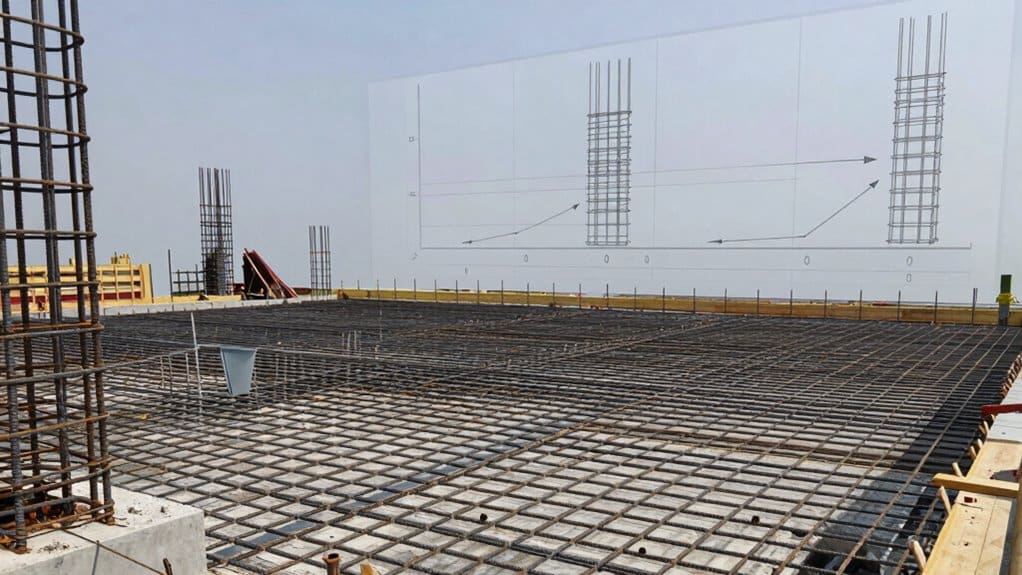
Foundation, Superstructure, and Lateral Load Assessments are about ensuring you can confirm Foundation Compliance Checks, verify Lateral Load Path Review, and validate Superstructure Design Verification.
You’ll look at how foundations carry loads, how lateral forces move through the building, and how the overall frame resists stresses, using clear criteria and codes.
This discussion sets the stage for precise, evidence-based recommendations your team can trust.
Foundation Compliance Checks
Foundation compliance checks combine careful on-site evaluation with precise documentation to verify that a structure meets both safety and loan-eligibility standards.
You’ll review soil bearing capacity, settlement, and moisture-related heaving, while inspecting cracks, footing stability, and drainage around the foundation. The process guarantees permanent installation, code compliance, and loan eligibility, especially for manufactured homes under HUD’s PFGMH guidelines.
You assess foundation durability by documenting footing sizes, piling or pier conditions, and slabs for alignment and deterioration with photos. Certification comes from engineer review of field data, notes, and photos, aligning with engineering standards.
You also confirm moisture intrusion controls and proper grading to prevent future movement, supporting lenders’ confidence in the overall structural integrity.
Lateral Load Path Review
Lateral Load Path reviews examine how forces move from the load-bearing parts of a structure to its foundation, through the superstructure, and into the ground.
You assess how a continuous path transfers lateral shear, uplift, and overturning forces, guaranteeing no gaps disrupt the flow. A solid path continuity means each element connects securely to the next, from shear walls to footings, with embedment depth and bolt spacing verified per code.
1) Foundation connections guarantee anchorage systems transfer forces without discontinuity.
2) Superstructure links, like nails, screws, and hold-downs, maintain force transfer to resistance elements.
3) Diaphragms and collectors distribute forces evenly and support path continuity across elevations.
4) Deficiency criteria flag non-continuous paths, misaligned framing, or inadequate blocking that impair transfer.
Superstructure Design Verification
When you verify a structure’s design, you’re confirming that the foundation, superstructure, and lateral load systems work together as a coherent whole.
You’ll conduct a thorough Superstructure Design Verification, tying together foundation details, framing plans, and load paths. Start with design optimization to guarantee material use is efficient without compromising safety.
During structural analysis, verify that framing plans align across drawings, floors meet loading conditions, and the system remains strong and serviceable under expected forces. Independent calculations on representative members validate adequacy, while a constructability review helps avoid construction issues and supports long-term durability.
This process confirms compliance with codes, performance criteria, and project design criteria, then documents results with visuals and measurements. Your role, as the engineer of record, remains central throughout.
Code and Specification Verification Standards
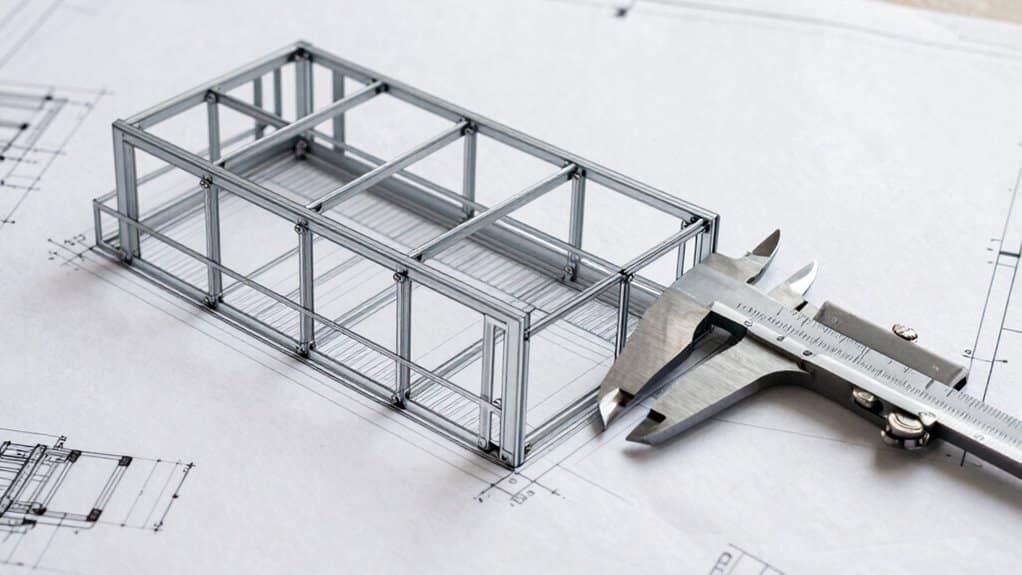
Code and specification verification standards guarantee that structural designs meet accepted requirements before construction begins. You verify code compliance by cross-checking with IBC, ASCE/SEI 7-22, and model codes that reference material standards without restating them in full.
Design verification then confirms that each component matches current acceptances for concrete, steel, and other materials.
- Confirm alignment with IBC 2024 and IEBC 2024 for new and existing buildings.
- Cross-check ACI 318/350 for concrete, and AISC 360 for steel sections and connections.
- Use verification tools to automate clause-referenced reports and load checks.
- Ascertain ongoing updates through ASCE five-year cycles and regional code adaptations.
This process emphasizes code compliance and design verification, delivering trustworthy, well-documented results for construction-ready designs.
Licensing, Professional Responsibility, and Legal Implications
Licensing, professional responsibility, and legal implications shape how structural engineers practice every day. You pursue licensing to prove you’re competent beyond a basic PE, especially for designated structures like buildings and bridges.
Licensing implications include passing FE early, then gaining four years of supervised, progressive experience, and finally meeting SE I and II exams for advanced competency.
Licensing requires FE success, four years of supervised experience, then SE I and II exams for advanced competency.
Professional accountability rests on accurate records, amplified work histories, and proper supervision by licensed engineers. You’ll need references—three licensed PEs and others with equivalent expertise—and may face firm licensure requirements with a professional-in-responsible-charge.
Legal consequences await non-compliance, from penalties to loss of good standing if you skip renewals or continuing education. States differ in recognition, but responsibility and public safety demand thorough, ethical practice.
Special Considerations for High-Razard and Performance-Based Designs
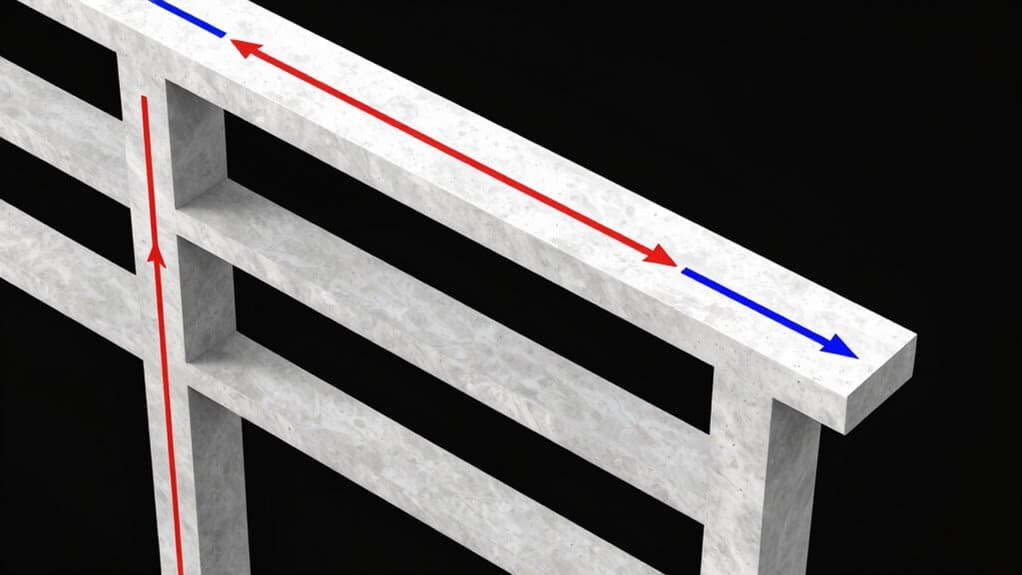
High-risk designs demand a careful, evidence-based approach that prioritizes safety without compromising practicality.
In these cases, you’ll confront complex criteria and rely on robust analysis to guide decisions. You should expect thorough evaluation of how environments influence performance, with emphasis on accurate modeling and clear risk judgments.
This topic highlights how high risk assessments and performance modeling shape design choices, ensuring resilience without unnecessary conservatism.
- Assess high-risk scenarios using site conditions, loads, and fault sources.
- Apply nonlinear response-history analysis to verify seismic performance.
- Verify wind, flood, and material behavior against code and project criteria.
- Integrate retrofitting status, drift limits, and site-specific hazard analyses into decisions.
Wrapping It Up
Conclusion: You’ll see that recognizing when a structural engineer review is needed protects people, property, and progress. By checking jurisdiction mandates, project scope, and critical elements like foundations and lateral systems, you confirm the appropriate independence and accuracy. Verification standards, licensing duties, and risk considerations shape responsible practice. Adopting a clear decision process helps you balance safety with efficiency, ensuring high-importance designs meet code, performance goals, and professional obligations without unnecessary delay.


