
7 Tips for Selecting Exterior Renovation Materials
Are you planning an exterior renovation but feeling overwhelmed by the multitude of material options? You're not alone; many homeowners and builders face the challenge of selecting the right materials that will not only enhance curb appeal but also withstand the test of time. In this article, "7 Tips for Selecting Exterior Renovation Materials," we will guide you through the essential considerations that can make or break your project. From understanding your local climate's impact on material durability to the importance of adhering to building codes, we’ll cover the critical factors that influence your choices. You’ll learn how energy efficiency can save you money in the long run and why sustainable options are worth considering, even within a budget. With expert insights and practical advice, this article aims to empower you to make informed decisions for your exterior renovation, ensuring a successful outcome that balances beauty and functionality.
Assessing Climate and Environmental Factors

How do climate and environmental factors influence material selection for renovations?
When renovating exteriors, it’s crucial to consider the specific climate and environmental conditions of your area. Different weather patterns necessitate particular materials to enhance durability and reduce maintenance.
For instance, in humid climates, rain screen systems can effectively shield your home from moisture, while areas prone to high winds or flooding require resilient materials.
- Opt for high-mass materials like brick and stone for heat retention in hotter regions.
- Choose lighter materials for milder climates to ensure longevity.
- Remember that local factors such as UV exposure and rainfall can accelerate wear over time.
- Incorporating energy-efficient materials can further reduce utility costs and improve sustainability.
Understanding these environmental influences allows you to choose materials that will last and minimize upkeep.
Evaluating Durability and Maintenance Needs
How can you ensure the durability and maintenance of your building materials?
When selecting materials, it's crucial to assess their longevity and upkeep requirements. Durable options like brick can last over 75 years, while wood siding offers significant lifespan potential with proper care.
Consider materials suited for your climate, such as vinyl siding, which performs well in humid environments.
- Evaluate the expected lifespan of each material.
- Understand the specific maintenance needs to maximize durability.
- Check warranty periods, as many fiber cement products offer 35 to 50-year warranties for added protection.
By prioritizing these factors, you can reduce long-term costs and maintenance efforts.
For further insights, explore our guide on sustainable building materials.
Balancing Aesthetic Appeal With Practicality
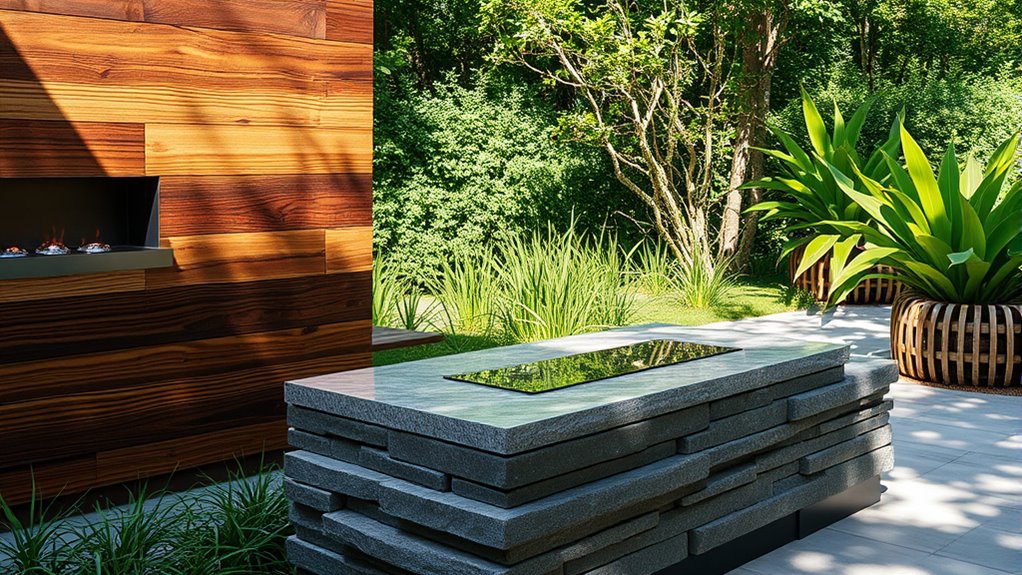
Selecting the right materials for your home's exterior is crucial for achieving a harmonious look while ensuring durability.
What innovative options are available that enhance both aesthetics and practicality?
Discover how to choose resilient materials that not only elevate your home's charm but also stand strong against the elements.
Harmony in Material Choice
How can you achieve harmony in material choice for exterior renovations?
Achieving harmony in material selection for exterior renovations involves balancing aesthetics with functionality.
To create a cohesive look that complements your home's architectural style, limit your materials to no more than three different types. This approach prevents visual clutter and ensures alignment with both your personal taste and the neighborhood's character.
Consider the local climate when selecting materials, as durable options reduce the need for frequent maintenance and replacements.
Additionally, prioritize energy-efficient materials that improve insulation, leading to potential savings on utility bills while enhancing your home's exterior appeal.
- Limit material types to three for visual cohesion.
- Choose weather-resistant options for longevity.
- Opt for energy-efficient materials for insulation benefits.
For further insights on enhancing your home's curb appeal, see our guide on exterior design trends.
Functionality Over Form
How can you choose durable materials for exterior renovations?
Selecting durable materials for your exterior renovation is crucial for long-lasting results. Fiber cement and metal siding are top picks due to their resilience against weather elements and minimal maintenance requirements.
In contrast, wood siding, while visually appealing, demands frequent upkeep to prevent decay and pest issues.
- Opt for moisture-resistant stucco in humid climates.
- Consider vinyl siding to combat humidity and reduce repair costs.
- Aim for energy-efficient materials that align with your home's architecture.
By balancing aesthetic appeal with functionality, you can ensure your renovation is both attractive and practical.
For more insights, check out our guide on energy-efficient home improvements.
Understanding Local Building Codes and Regulations
How can you navigate local building codes for exterior renovations?
Navigating local building codes for exterior renovations requires a clear understanding of regulations that affect your material choices.
These codes ensure safety, fire resistance, and the structural integrity of your home. Familiarizing yourself with these regulations can also lead you to select materials suitable for your area's climate challenges, such as humidity and extreme temperatures.
- Consult local authorities or experienced contractors for compliance verification.
- Review any deed restrictions or HOA guidelines to align with community standards.
- Research durable materials that fit your local environment's needs.
For further insights, explore our guide on understanding building permits and approvals.
Considering Energy Efficiency and Insulation
Choosing high-insulation materials like fiber cement and insulated vinyl siding is crucial for optimizing energy efficiency in your home.
But how can you further enhance your home's comfort and possibly save more on your energy bills?
Let's explore the impact of energy-efficient windows and doors on your overall renovation strategy.
Insulation Properties Matter
How can you choose materials that enhance insulation for exterior renovations?
When selecting materials for exterior renovations, prioritize those with high insulation properties to improve energy efficiency. Materials with a higher R-value, which indicates superior thermal resistance, are essential for reducing heating and cooling costs by 20-30%.
For instance, fiber cement siding offers R-values between 3 and 4, providing decent insulation.
- Consider brick or stone for their excellent thermal mass.
- Explore vinyl siding options that may need added insulation layers.
- Assess the overall impact on indoor comfort and energy ratings.
By focusing on insulation, you can attract eco-conscious buyers and enhance your home's value.
For more detailed insights, refer to our guide on energy-efficient building materials.
Weather Resistance Importance
How do weather-resistant materials boost home energy efficiency?
Opting for weather-resistant materials is crucial for improving your home's energy efficiency and insulation. Choices like fiber cement and metal siding minimize heat loss, reducing reliance on heating and cooling systems.
This enhancement promotes comfort throughout various seasons and can lead to significant energy savings.
- Select moisture-resistant stucco for humid climates to protect against damage.
- Consider brick or stucco for their excellent insulation properties.
- Look for high-performance materials with energy-efficient ratings to lower your carbon footprint.
By focusing on these materials, you can create a more sustainable and cost-effective home.
For further insights on energy-efficient renovations, explore our guide on sustainable building materials.
Energy Cost Reduction
How can you reduce energy costs through material selection?
To effectively cut energy costs, prioritize materials that enhance both energy efficiency and insulation. Selecting the right exterior materials can lead to substantial savings on your utility bills.
Focus on options with excellent insulation properties, such as fiber cement or insulated vinyl siding, to minimize heat transfer.
Additionally, consider energy-efficient windows and doors with double or triple glazing to prevent heat loss. In warmer climates, materials with reflective coatings or lighter colors can reduce heat absorption, further lowering air conditioning expenses.
- Choose high-quality insulation materials.
- Invest in energy-efficient glazing for windows.
- Opt for reflective or light-colored exterior finishes.
For deeper insights on energy-efficient upgrades, see our comprehensive guide on sustainable home improvements.
Exploring Material Options and Costs
How do you select the best materials for your exterior renovation?
Choosing the right materials for your exterior renovation involves balancing aesthetics, budget, and long-term performance. Start by considering materials that enhance your home’s architectural style while fitting within your financial plan.
While options like vinyl siding are economical, they may require more upkeep over time.
- Explore durable materials such as fiber cement or stone that, although pricier upfront, often yield savings on maintenance.
- Consider insulation properties of materials like brick or stucco to improve energy efficiency and lower utility costs.
- Verify local building codes and HOA restrictions to ensure compliance and avoid unexpected expenses.
For further insights on enhancing your home’s exterior, check out our guide on sustainable renovation options.
Seeking Expert Advice for Informed Decisions
How can expert advice improve your exterior renovation decisions?
Seeking guidance from professionals, such as builders or architects, can significantly elevate your renovation strategy. Their expertise not only aids in navigating local regulations and compliance but also ensures that your project aligns with your home's style and environmental conditions.
Consulting experts ensures compliance and harmony with your home's style and environmental context.
- They provide insights on material choices that enhance both durability and visual appeal.
- Experts conduct life-cycle cost analyses, helping you understand the long-term financial implications of your selections.
- Access to quality materials and reputable suppliers is another advantage of engaging professionals.
For a comprehensive understanding of materials and best practices, check out our guide on selecting the right exterior finishes.
Conclusion
In summary, selecting the right exterior renovation materials is essential for ensuring your home remains resilient and visually appealing. By applying the strategies outlined in this article, you can effectively navigate choices that enhance durability and aesthetics, ultimately saving you time and money. Prioritizing energy efficiency and understanding local regulations will further benefit your renovation efforts. If you're eager to learn more about optimizing your home’s exterior, consider exploring additional tips or reading related guides to take informed steps toward your renovation project.
10 Sustainable Choices for ADU Construction
Building an Accessory Dwelling Unit (ADU) can be exciting, but did you know that over 70% of homeowners are concerned about the environmental impact of construction? If you're among those looking to create a sustainable ADU, you're not alone. This article is designed for homeowners and builders alike who want to tackle the challenge of construction waste and energy inefficiency head-on. By exploring 10 Sustainable Choices for ADU Construction, you'll discover how integrating solar panels, LED lighting, and double-pane windows can elevate your project. We’ll delve into the benefits of energy-efficient appliances, water conservation methods, and the importance of eco-friendly materials. Additionally, you’ll learn about innovative strategies like rainwater harvesting and passive solar design, which can enhance both functionality and sustainability. Join us on this journey to make informed, environmentally-conscious decisions that will benefit you and future generations.
Exploring Types of ADUs
What Are the Benefits of Different Types of ADUs?
Exploring various types of accessory dwelling units (ADUs) reveals distinct advantages tailored to your space and design preferences.
Interior ADUs, commonly located in basements or garages, enhance energy efficiency by utilizing existing structures. This sustainable approach minimizes new construction, reducing waste and conserving resources.
Detached ADUs provide privacy and can be equipped with energy-efficient systems, such as solar panels, to boost eco-friendliness.
In contrast, attached ADUs share utilities with the main home, resulting in cost-effective construction and seamless integration.
As zoning laws become more flexible, these adaptable options are pivotal in addressing housing shortages and promoting sustainable urban growth. Additionally, investing in multi-generational living through ADUs can create harmonious family dynamics while maximizing property value.
For further insights on maximizing space with ADUs, see our guide on optimizing your property layout.
Economic Advantages of ADUs
Constructing an ADU not only elevates your property's value but also provides a lucrative rental opportunity that can lead to greater financial security. This additional income can significantly enhance your overall investment strategy by providing substantial rental income that supports local economic growth. Exploring the multifaceted benefits of ADUs reveals their potential to transform communities and bolster housing availability.
Supplemental Income Opportunities
How can building an Accessory Dwelling Unit (ADU) boost your finances?
Constructing an Accessory Dwelling Unit (ADU) can lead to significant financial benefits. By renting out your ADU, you can generate a supplemental income stream, alleviating mortgage burdens.
With rental rates ranging from $1,200 to $2,500 monthly, your ADU can provide a dependable source of cash flow.
- Increases property value by up to 35%
- Strengthens your overall financial stability
- Contributes to local housing supply without overburdening infrastructure
- ADUs can also increase property value by 20-30%, depending on location and quality.
Investing in an ADU isn't just about immediate earnings; it also enhances your property’s equity and investment potential.
For more insights on maximizing your property’s value, see our guide on increasing home equity.
Property Value Increase
How does adding an Accessory Dwelling Unit (ADU) increase property value?
Adding an ADU can significantly boost your property's value, with homes featuring these units typically valued about 35% higher than those without. This improvement not only enhances your property equity but also positions your home as a lucrative investment opportunity.
Consider these key benefits:
- Increased Property Worth: ADUs elevate the overall market value of your home, providing substantial returns in the long run.
- Eco-Friendly Design: Implementing sustainable features can further attract buyers and increase financial advantages.
- Rental Income: Many ADU builders plan to rent out their units, creating an additional revenue stream that can help offset mortgage payments.
Explore the potential of ADUs to maximize your investment. For more insights, check out our detailed guide on maximizing property value through home improvements.
Local Economic Boost
How do Accessory Dwelling Units benefit the local economy?
Adding an Accessory Dwelling Unit (ADU) not only enhances your home's value but also significantly boosts the local economy. By increasing the number of taxable housing units, ADUs can elevate municipal revenue without the need for extensive infrastructure development. This contributes to a more vibrant community and encourages local spending.
Furthermore, about 50% of ADU builders intend to rent their units, generating additional income that stimulates economic activity. This construction promotes job creation in sectors such as construction and plumbing, further strengthening the job market.
- Consider energy-efficient systems for sustainability.
- Focus on local resources to minimize water usage.
- Market your ADU as affordable housing to attract workforce populations.
For more insights on maximizing your ADU investment, see our guide on sustainable building practices.
Social and Environmental Benefits
How do Accessory Dwelling Units benefit communities and the environment?
Accessory Dwelling Units (ADUs) play a pivotal role in enhancing community dynamics and promoting environmental sustainability. By providing additional housing options, ADUs encourage families to live closer together, strengthening support networks and social cohesion.
ADUs enhance community dynamics, promote environmental sustainability, and strengthen family support networks by encouraging close-knit living.
They also help address the housing affordability crisis by increasing the availability of homes without necessitating major infrastructure changes.
- Utilize existing residential spaces to minimize urban sprawl.
- Incorporate eco-friendly materials to reduce carbon footprints.
- Support multi-generational living to foster community bonds.
By implementing ADUs, neighborhoods can become more resilient and sustainable.
For further insights into the design and implementation of ADUs, check out our detailed guide on maximizing small space living.
Green Building Materials for ADUs

How can you incorporate green building materials into ADUs?
Incorporating eco-friendly materials into Accessory Dwelling Units (ADUs) is vital for sustainable living. Opt for sustainable options like bamboo and reclaimed wood, which enhance durability and aesthetic appeal while minimizing environmental impact.
Additionally, using recycled materials, such as recycled glass countertops and low-VOC paints, significantly improves indoor air quality and promotes a healthier living environment.
- Choose locally sourced materials to reduce transportation emissions.
- Select durable options like fiber cement siding to lower maintenance needs.
- Consider sustainable insulation options, such as cellulose or recycled denim, for better energy efficiency.
For further insights, explore our guide on creating energy-efficient ADUs.
Prefabrication Technology in ADU Construction
How does prefabrication technology enhance ADU construction?
Prefabrication technology significantly streamlines the construction of Accessory Dwelling Units (ADUs). By assembling building components off-site in a controlled environment, you can reduce construction timelines by as much as 50%.
This method not only speeds up the overall process but also ensures higher precision in manufacturing, leading to improved quality.
Moreover, this approach promotes sustainability by minimizing waste and optimizing resource use. With prefabricated components designed for enhanced energy efficiency and insulation, homeowners can also benefit from reduced utility bills.
- Save time: Cut construction timelines dramatically.
- Minimize waste: Use materials more efficiently.
- Lower costs: Achieve significant savings on your budget.
To explore more about the benefits of prefabricated construction, check out our guide on sustainable building practices.
Integrating Renewable Energy Solutions

How can integrating renewable energy enhance ADU construction?
Integrating renewable energy solutions, particularly solar panels, can significantly enhance your ADU's construction by promoting sustainability and reducing utility costs.
Solar panels boost sustainability and cut utility costs in ADU construction.
Solar photovoltaic (PV) systems may meet up to 100% of your energy requirements, enabling a transition away from fossil fuels and towards a greener lifestyle.
To optimize your ADU's energy efficiency, consider these strategies:
- Pair solar panels with energy-efficient appliances.
- Implement smart home technology for real-time energy monitoring.
- Utilize rainwater harvesting systems to further enhance resource efficiency.
These enhancements create an eco-friendly living space that not only conserves resources but also minimizes your carbon footprint.
For more insights on sustainable practices, see our guide on eco-friendly building techniques.
Energy-Efficient Lighting and Fenestration
How can energy-efficient lighting and fenestration enhance ADU comfort and savings?
Incorporating energy-efficient lighting and advanced fenestration into your ADU construction can lead to substantial savings and improved comfort.
For instance, using LED lighting can decrease energy usage by up to 75% compared to traditional options, significantly lowering electricity expenses.
Additionally, selecting double- or triple-pane windows with low-emissivity coatings enhances insulation, potentially reducing energy costs by up to 12%.
- Implement daylighting strategies with strategically placed windows and skylights.
- Choose high-efficiency LED fixtures for all lighting needs.
- Invest in quality fenestration materials to maximize energy savings.
These enhancements not only make your ADU more cost-effective but also promote an eco-friendly living environment.
To learn more about optimizing energy efficiency in your ADU, see our guide on sustainable building practices.
Water Conservation Techniques for ADUs
Implementing efficient fixtures and rainwater harvesting can significantly enhance water conservation in your ADU.
How can you further optimize your outdoor water usage to complement these indoor strategies?
Exploring smart irrigation systems and drought-resistant landscaping can provide sustainable solutions for your garden while minimizing water waste.
Efficient Fixture Selection
How can you optimize water conservation in ADU construction?
To enhance water conservation during ADU construction, selecting efficient fixtures is crucial.
Begin by installing low-flow toilets, which can reduce water usage by up to 60% compared to conventional models. Additionally, using low-flow faucets and showerheads can save around 30% more water than traditional options, significantly boosting your sustainability efforts.
- Choose ENERGY STAR-rated appliances like dishwashers and washing machines to cut water usage by up to 50%.
- Consider rainwater harvesting systems to further supplement water needs sustainably.
- Implement greywater recycling systems for irrigation and non-potable uses.
For further insights on sustainable construction practices, refer to our detailed guide on eco-friendly building materials.
Rainwater Harvesting Systems
How can rainwater harvesting systems enhance sustainability in ADU construction?
Rainwater harvesting systems significantly contribute to sustainability in Accessory Dwelling Unit (ADU) construction by capturing rainwater to meet up to 50% of household water needs.
This practice not only diminishes dependence on municipal water supplies but also leads to potential savings of up to 40% on water bills.
By collecting rainwater from roofs and directing it into storage tanks, homeowners can use this resource for non-potable purposes like irrigation and toilet flushing.
- Implementing these systems can also qualify you for government incentives and rebates.
- They help mitigate stormwater runoff, decreasing erosion and flooding risks.
- Improved local water quality contributes to a healthier environment.
To learn more about the technical aspects and benefits, see our guide on rainwater harvesting systems.
High-Usage Area Focus
How can you enhance water conservation in a sustainable ADU?
To create a sustainable Accessory Dwelling Unit (ADU), focus on high-usage areas where water conservation can yield significant benefits. First, install low-flow fixtures such as toilets and showerheads, which can reduce indoor water consumption by up to 30%.
Additionally, incorporating water-efficient appliances like ENERGY STAR-rated dishwashers and washing machines won't only lower water usage per cycle but also support an eco-friendly lifestyle.
- Regularly check for leaks to prevent unnecessary water waste.
- Optimize irrigation systems with smart technology for outdoor areas.
- Utilize greywater systems for landscaping purposes.
By implementing these strategies, you can significantly reduce your environmental footprint.
For further tips on sustainable living, check out our guide on eco-friendly building practices.
Incorporating Smart Technology for Energy Management
How can incorporating smart technology transform energy management in ADUs?
Incorporating smart technology into ADUs can significantly enhance energy management. By utilizing energy management systems, homeowners can achieve up to an 8% reduction in heating and cooling costs through programmable thermostats that adapt to occupancy.
Additionally, smart appliances equipped with energy monitoring features allow for remote management, enabling quick adjustments to HVAC systems and lighting for optimal efficiency.
- Utilize real-time monitoring to identify energy inefficiencies.
- Implement smart thermostats for automatic adjustments.
- Leverage smart appliances to track and reduce energy consumption.
By embracing these innovations, you not only save money but also contribute positively to environmental sustainability.
For more insights on sustainable design, check out our guide on eco-friendly home solutions.
Maximizing Natural Resources in ADU Design
How can maximizing natural resources enhance ADU design?
Maximizing natural resources in ADU design boosts sustainability and significantly lowers long-term operational expenses. By orienting your ADU towards the south, you capitalize on passive solar heating and natural lighting, which reduces the need for artificial heating and lighting.
High-performance insulation materials like recycled denim or cellulose can further enhance energy efficiency, leading to decreased heat loss and lower energy bills.
To implement these strategies effectively:
- Install large, double- or triple-pane Low-E windows for improved insulation and natural light.
- Design for cross-ventilation by strategically placing windows and doors.
- Consider rainwater harvesting systems to promote sustainable water usage.
For more insights on eco-friendly building practices, see our guide on sustainable architecture.
Conclusion
In conclusion, choosing sustainable options for your ADU construction is not just about building a home; it’s about investing in a better future. By implementing the strategies outlined in "10 Sustainable Choices for ADU Construction," you can significantly reduce energy costs, lower your carbon footprint, and enhance your quality of living. These eco-friendly practices not only contribute to a healthier planet but also yield long-term financial benefits. Consider exploring more tips on sustainable building or read a related guide to take your first step toward creating an efficient and environmentally conscious space.
