

Universal Design Features for Aging in Place
Use universal design features to keep you safe, independent, and comfortable at home. Prioritize zero-step entry, smooth ramps, and wide doors with enough turning space. Add bright, even lighting, motion lights, and slip-resistant flooring along walkways. In bathrooms, install grab bars, a shower bench, and non-slip surfaces, and use anti-scald valves. In kitchens, set reachable counters and lever-style controls. Finally, use pull-out storage and smart shutoff reminders to reduce falls, there’s more to learn next.
Start Here: Universal Design for Aging in Place Priorities
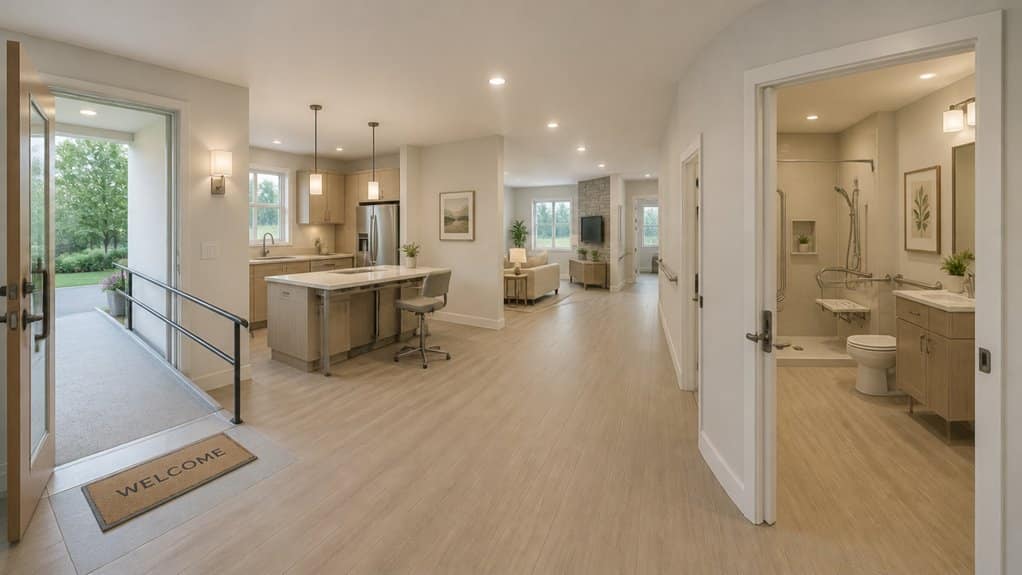
Before you make any changes, focus on priorities that help you stay safe, independent, and comfortable at home as you age. Start with clear pathways, good lighting, and reliable heating, because falls and cold rooms hurt first.
Next, choose universal design features that support social inclusion. For example, create seating areas where you can host friends, and add controls that are easy to reach and understand.
You should also plan for community support by designing an entry to invite neighbors in, even for short visits.
Keep tasks simple: organize storage within easy reach, label shared spaces, and reduce clutter.
When your home supports daily routines and connections, you feel more in control, and life feels easier.
Aging in Place Zero-Step Entry, Ramps, Door Widths
A zero-step entry helps you reach your home without traversing a risky threshold, and it often starts with smart site grading and a careful path from parking to the door. When you design for outdoor mobility, you reduce the strain on knees and ankles, and you lower fall risk. If you need a ramp, you plan for smooth slopes, stable surfaces, and landings where you can pause and turn. Keep ramp runs consistent, and use a handrail so you feel steady without rushing. For doorways, choose wider openings and easy-to-operate hardware, so wheelchairs, walkers, and strollers pass comfortably. Many homeowners use wheelchair accessibility improvements like ramp installation and expanded doorways after accidents to create a safer daily routine. Strong entryway design also includes enough turning space inside the doorway, which keeps daily routines simpler.
Safer Walkways: Lighting and Slip-Resistant Floors
When you design safer walkways, start by making every step easy to see and hard to slip on, especially at night or during bad weather. Use bright, even lighting along entrances, ramps, and turns, and place fixtures so shadows don’t hide changes in level. Add motion-activated or dusk-to-dawn lights for reliable outdoor surfaces safety.
Next, choose slip-resistant pathway materials that keep grip even when damp. Look for textured surfaces, proper traction ratings, and finishes that resist wear and algae. Keep connections smooth, but reduce abrupt edges between sidewalk sections, decking, and driveway crossings.
Clear debris, trim overhanging plants, and mark any step or ramp with high-contrast strips. When you combine lighting and traction, you reduce falls and boost confidence.
Bathroom Universal Design: Shower, Toilet, and Grab Bar Upgrades
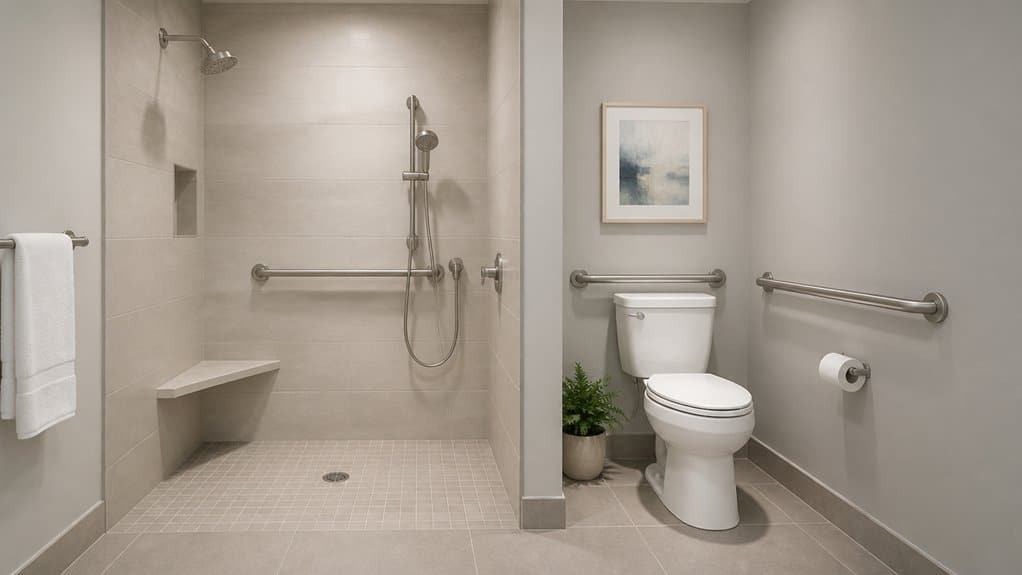
Upgrading the bathroom supports aging in place just as strongly as safer walkways do, because falls often happen inside during trips to the shower or toilet.
You can prevent hazards by tailoring daily surfaces and supports to your body’s needs. Start with these high-impact upgrades that improve confidence and reduce strain.
- Set comfortable toilet height and add clear grab bar placement near sitting, standing, and side transfers.
- Install shower benches and non slip mats; control water temperature with anti-scald valves for steadier, safer rinsing.
- Use accessible storage so shampoo, soap, and towels stay within easy reach, avoiding awkward bending or stretching.
You’ll notice fewer wobbly moments and smoother bathroom routines, which supports independence, and wheelchair accessibility modifications can further reduce barriers during daily use.
Aging in Place Kitchen Safety: Reach, Knobs, and Controls
When you plan your kitchen for aging in place, start with accessible countertop heights so you can work comfortably without overreaching. Choose easy-grip, lever-style controls for stoves, faucets, and appliances, and pair them with clear labels plus tactile cues so you can operate them confidently. These upgrades reduce strain and confusion, helping you stay safer and more independent day to day. For added safety, consider accessible kitchen layout elements that minimize reaching and potential trip hazards throughout the space.
Accessible Countertop Heights
Accessible countertop heights keep everyday tasks safer and easier, and they help you maintain independence as your mobility changes. You can choose heights that let you work without bending or stretching, so cooking stays comfortable.
Use an ergonomic design approach: align your knee space with the counter so you can pull in close, and keep frequently used items within easy reach. When you plan countertop materials, select durable, non-slip surfaces that stay stable under a damp cloth or spills.
- Set counter height for standing or seated tasks, using adjustable bases when possible.
- Create clear knee space under key sections, reducing pressure on hips and back.
- Place sink and prep areas at matching levels, so you don’t twist while washing or cutting.
Easy-Grip, Lever-Style Controls
Even with the right countertop height, kitchen tasks become safer only if you can operate faucets and appliances smoothly, without straining.
Choose easy-grip, lever-style controls that match an ergonomic design, so you can use less grip strength and fewer wrist twists. When you place levers within easy reach, you reduce the risk of spills caused by awkward turning.
Look for user-friendly interfaces on stoves, mixers, and dishwashers, where short lever travel quickly starts, stops, and adjusts settings. You can control water temperature with a gentle action, and you can pause cooking without fumbling.
Soft traction grips help your hand maintain contact, even when hands are damp. Test buttons and levers while standing or seated, so you know they work for you.
Clear Labels And Tactile Cues
- Label each control clearly and place labels at eye level.
- Use raised dots, ridges, or swipe patterns to guide by touch.
- Keep legends high-contrast and regularly check they stay legible.
Smart Storage and Safety Controls to Prevent Falls
You can reduce fall risk by using motion-sensing night lighting, so pathways stay visible without you fumbling for switches.
Add slip-resistant pull-out shelves to bring heavy items within easy reach and help you keep stable footing while moving around.
Finally, consider voice-controlled shutoff systems for stoves and other hazards, so you can turn things off quickly if you feel unsteady.
Motion-Sensing Night Lighting
Motion-sensing night lighting helps you move through your home safely at night, and it does so by turning on only when it detects motion. This approach supports ambient lighting where you need it, without blasting bright glare that can confuse your eyes.
With the right setup, you strengthen your safety awareness and reduce the risk of missteps on stairs, hallways, and routes to the bathroom.
- Position fixtures along likely travel paths, so light appears as you approach.
- Use warm, low-glare bulbs and adjust sensitivity to match your typical walking speed.
- Add timers or battery backup so the system stays reliable during outages.
You stay oriented, you react faster, and you can navigate independently.
Slip-Resistant Pull-Out Shelves
Slip-resistant pull-out shelves help you access items safely, especially when you need to bend, reach, or reposition yourself in the kitchen or pantry. When you install shelves with a grippy surface, you reduce slipping and dragging, even if your hands are slightly damp.
Pull-outs also let you keep heavy or frequently used items at comfortable heights, supporting an ergonomic design that minimizes strain. Look for smooth runners that extend fully and stop securely, so drawers don’t jerk back or slide away.
You should choose user-friendly features like raised rails that contain jars and prevent spills. With clear labeling and adjustable positions, you organize food and supplies logically, reducing clutter and trips.
Voice-Controlled Shutoff Systems
Smart storage and safety controls can make aging in place safer by reducing risky moments, and voice-controlled shutoff systems help you do exactly that.
When you leave the kitchen, laundry area, or bathroom, you can use voice activation to command lights, fans, or hot water to turn off. This matters because forgetting is common during busy days, especially when you feel rushed or distracted.
You also reduce fall risk by avoiding hurried returns to double-check switches.
- Use simple voice commands to shut off appliances safely.
- Receive automated alerts if a device stays on too long.
- Add backup switches for times when your voice, phone, or Wi‑Fi fails.
Wrapping It Up
When you plan universal design for aging in place, you choose safety that works every day, not just during emergencies. Zero-step entries ease arrivals, while better lighting and slip-resistant floors keep your path steady. In the bathroom, walk-in showers, reachable toilets, and secure grab bars reduce strain. In the kitchen, sensible reach and clearer controls prevent “too far” surprises. With smart storage and safety switches, you trade worry for confidence.
Bathroom Vanity Designs
Modern bathroom vanity designs blend style with functionality, offering you endless possibilities for your space. You'll find options ranging from sleek floating vanities to traditional wall-to-wall installations, with materials like solid wood, marble, and quartz providing durability and elegance. Popular features include custom storage solutions, integrated lighting, and smart organization systems that maximize space efficiency. White remains the dominant choice, though wood tones have gained significant popularity, representing 30% of current designs. Double vanities offer practical solutions for shared spaces, while space-saving options work well in smaller bathrooms. The latest innovations in vanity design combine aesthetic appeal with practical features that can transform your bathroom experience.
Popular Vanity Styles Today

Today's bathroom vanity trends reflect a perfect blend of form and function. You'll find that modern vanities combine sleek aesthetics with practical features, offering unique basin options and stylish mirror choices that transform your bathroom into a contemporary sanctuary.
Whether you're drawn to double basin designs for shared spaces or compact cloakroom units for smaller bathrooms, there's a style that matches your needs. White remains the dominant choice for vanities, with wood tones increasing to 30% in popularity among homeowners.
Custom and semi-custom vanities have become increasingly popular, with over 60% of homeowners choosing these personalized options. You'll appreciate thoughtful features like soft-close drawers and built-in electrical outlets that make your daily routine more convenient.
For those who prefer a minimalist approach, single drawer vanities provide essential storage while maintaining a clean, uncluttered look. If you're looking for flexibility, countertop vanity units let you select from various basin styles while maximizing your usable surface area.
The trend toward modern aesthetics continues with sleek metallic hardware and warm wood finishes. You can choose from sizes ranging from 30 to 72 inches, ensuring you'll find the perfect fit for your space while incorporating current design elements that complement your bathroom's overall style.
Materials That Last
Durability stands as the cornerstone of bathroom vanity materials, with each option offering distinct advantages for your space.
When you're selecting sustainable materials for your vanity, you'll find that solid wood remains a timeless choice, delivering both strength and natural beauty. However, you'll need to protect it with innovative finishes to combat moisture concerns.
For a more stable option, plywood vanities offer excellent durability with less susceptibility to humidity changes. They're particularly appealing if you're seeking the wood aesthetic at a lower price point. Marine-grade plywood options provide superior moisture resistance for bathrooms with high humidity levels.
MDF presents another cost-effective choice, though you'll want to guarantee proper sealing to prevent water damage in humid environments.
Modern alternatives have expanded your options considerably. Metal vanities provide outstanding longevity with minimal maintenance, while laminate surfaces offer reliable moisture resistance.
If you're looking for unique designs, glass and concrete deliver distinctive appeal with remarkable durability. PVC and thermofoil finishes represent newer innovations, giving you water-resistant properties and easy maintenance.
When choosing your vanity material, consider your bathroom's specific conditions and your maintenance preferences to guarantee you're selecting a solution that'll stand the test of time.
Storage Solutions For Every Space

Building on your choice of durable materials, the next challenge lies in maximizing every inch of your bathroom vanity space. You'll find that vertical organization offers remarkable potential, from tiered organizers in cabinets to strategically placed shelving under the sink. Consider incorporating labeled baskets and trays to sort items by type or household member.
By incorporating drawer dividers and transparent containers, you'll transform cluttered spaces into well-organized sections that make finding items effortless. Additionally, creative space-saving features such as portable storage and over-the-door organizers can significantly enhance functionality in small bathrooms.
Don't overlook the valuable real estate on your walls and doors. Install suction cup hooks, mini shelves, and decorative mirror cabinets to expand your storage options without compromising floor space.
Over-the-door racks and hanging baskets provide additional solutions that won't damage your walls, while self-adhesive hooks offer flexibility in arrangement.
For smaller bathrooms, you'll want to explore space-saving options like wall-mounted vanities or slim storage carts. Choose vanities up to 30 inches wide to maintain functionality without overwhelming the room.
Remember to utilize pull-out systems and stacking containers to optimize cabinet space, and incorporate washable bins to manage spills and clutter effectively.
With these smart storage solutions, you'll create an organized, efficient bathroom that maximizes every available space.
Double Vanity Design Ideas
Modern double vanity designs offer you wall-to-wall solutions that combine elegance with practicality, featuring extended mirrors and symmetrical layouts to maximize your bathroom's visual appeal.
You'll appreciate how contemporary floating designs create an airy atmosphere while incorporating smart storage features like built-in dressing tables and organized drawer systems. The addition of flexible lighting options allows for customized illumination that meets individual needs.
Whether you're working with a spacious master bath or a compact shared space, today's double vanity options let you balance style and function through thoughtful elements like elevated cabinetry and dual-zone arrangements that guarantee everyone has their own designated area.
Elegant Wall-to-Wall Solutions
Transforming your bathroom into a luxurious retreat, wall-to-wall vanities offer an elegant solution that maximizes every inch of available space.
You'll find that these designs seamlessly combine wall to wall functionality with elegant aesthetics, creating a stunning focal point while providing extensive storage and counter space.
When you're working with an elongated bathroom, wall-to-wall vanities can turn what might seem like a challenging layout into a significant advantage. Popular design choices include natural stone materials that elevate the overall aesthetic while providing durability, making them a sought-after option in eco-friendly materials.
By spanning the entire wall, you'll gain ample countertop area for your daily routines while maintaining a clean, sophisticated appearance.
The design helps define distinct zones within your bathroom, improving both organization and flow.
You can enhance your wall-to-wall vanity by incorporating decorative elements like console niches with stylish baskets, adding both practical storage and visual interest.
If you're dealing with a spacious bathroom, these vanities serve as an impressive centerpiece that ties the room together.
Consider extending mirror panels across the length of your vanity and adding embedded lighting fixtures to maximize visibility while maintaining the sleek, uncluttered appearance that makes wall-to-wall designs so appealing.
Space-Maximizing Storage Features
Designing a double vanity that maximizes storage requires strategic planning and innovative solutions. You'll find that combining different drawer depths and sizes creates versatile storage options, while innovative drawer designs like pull-out trays and dividers keep your items organized and easily accessible. Natural stone countertops add elegance while providing durability for daily use.
To maximize your vanity's potential, consider incorporating a full-size bottom drawer for larger items, complemented by shallower drawers for daily essentials. You'll appreciate compact storage solutions like in-drawer outlets for charging devices and hidden compartments for laundry or waste bins.
The space between double vanities doesn't have to go to waste - utilize it with countertop cabinets or vertical storage units.
For ideal organization, you can customize storage sections based on your specific needs. Rev-A-Shelf drawers offer practical pullout solutions, while shallow trays placed over deeper sections help separate smaller items from bulkier ones.
When you're working with limited space, wall-mounted vanities and narrow-depth designs provide essential storage without overwhelming your bathroom. By combining these features strategically, you'll create a functional and efficient double vanity that meets all your storage needs.
Contemporary Floating Designs
Contemporary floating vanities redefine double bathroom design with their sleek aesthetics and space-saving features. You'll find that these wall-mounted fixtures create an airy, open feel while maximizing your bathroom's floor space.
The minimalist aesthetic of floating designs perfectly complements modern decor choices, offering clean lines and sophisticated appeal. The premium hardwood plywood construction ensures lasting durability and stability in modern bathrooms. The incorporation of natural materials enhances both environmental sustainability and visual appeal.
When you're exploring floating shelf benefits, you'll appreciate how these vanities combine form and function. The streamlined look includes integrated lighting, pull-out drawers, and concealed storage areas that keep your essentials organized without compromising style.
You can customize your space with options like double under-mount sinks, soft-close cabinets, and extended mirrors that enhance visibility while creating the illusion of a larger room.
Consider incorporating elements like Scandinavian-inspired light wood finishes or beach-style accents to personalize your floating vanity.
The versatile designs often feature practical touches like pre-drilled holes for faucets and contrasting hardware in gold or black.
With easy maintenance and ergonomic design features, you'll find that contemporary floating vanities offer both style and practicality, making them an excellent choice for modern bathroom updates.
Customizing Your Bathroom Vanity

Your bathroom's vanity serves as both a functional centerpiece and an opportunity for personal expression. When exploring vanity customization options, you'll find countless ways to create a design that perfectly matches your style and needs. From selecting materials and finishes to incorporating personalized design features, you can craft a vanity that's uniquely yours.
Working with high-quality craftsmen ensures superior durability and a luxury appearance that can increase your home's value.
Reflect on these essential elements when customizing your bathroom vanity:
- Layout Configuration - Choose from horizontal, L-shaped, or galley-style designs to maximize your space efficiently.
- Storage Solutions - Select drawer combinations, cabinet configurations, and organizational features that meet your specific needs.
- Material Selection - Pick from options like granite, quartz, or marble for countertops, and various woods for cabinetry.
- Technological Integration - Add modern touches like built-in USB ports, electrical outlets, or LED lighting.
You'll want to contemplate both aesthetics and functionality when planning your custom vanity.
Think about your daily routines and storage requirements while selecting features that complement your bathroom's overall design.
Whether you're working with a designer or planning independently, focusing on these key aspects will help guarantee your vanity serves you well for years to come.
Mixing Materials And Finishes
Mixing materials and finishes can kick your bathroom vanity design up a notch, creating visual interest and depth that single-material designs often lack.
When you're planning your material combinations, contemplate pairing solid wood cabinets with stone countertops, or mixing metal finishes like brass and black for a sophisticated look. For best results, keep your metal combinations to two or three finishes to maintain visual harmony.
You'll want to maintain finish consistency within each plane of your vanity. For example, keep all your cabinet hardware in the same finish, while you can experiment with different finishes for your faucets or lighting fixtures.
If you're working with metals, try combining shiny nickel with matte brass, or explore dynamic pairings like copper with steel or black.
Remember to contemplate practical aspects when selecting materials. Plywood offers an affordable, durable base for your vanity, while granite or marble countertops add luxury but require more maintenance.
You'll also need to factor in humidity resistance, especially in bathroom environments. If you're struggling to find the perfect finish match, products like Rub 'n Buff can help you achieve a cohesive look through DIY customization.
Space-Saving Vanity Options

While material selection sets the tone for your vanity, smart space planning determines its functionality.
Today's compact designs offer innovative solutions that maximize every inch of your bathroom while maintaining style and practicality. You'll find eco-friendly options that not only save space but also reduce environmental impact through sustainable materials and water-efficient fixtures. Glass storage bins provide an elegant way to organize essentials while maintaining visibility.
When considering space-saving vanities, here are four key configurations that can transform your bathroom:
- Floating vanities that create an illusion of more floor space while providing hidden storage compartments
- Corner vanities that utilize often-wasted corner spaces, perfect for smaller bathrooms
- Wall-mounted sinks paired with vertical storage solutions for maximum efficiency
- Pedestal designs that combine elegance with space-saving functionality
You can enhance these compact designs with smart storage solutions like pull-out organizers and wall-mounted shelves.
Consider installing a floating vanity with reinforced frames for durability, and add rolling storage underneath for extra functionality.
Light-colored finishes and metallic accents can make your small bathroom feel more spacious, while natural wood tones bring warmth to the space without overwhelming it.
Luxury Vanity Features
Luxury bathroom vanities elevate everyday routines with sophisticated materials and thoughtful design elements. You'll find premium materials like solid wood and eco-friendly materials combined with innovative technology to create stunning, functional pieces.
From marble and quartz countertops to sophisticated finishes, these vanities offer both durability and style while standing up to humid bathroom environments.
Storage solutions in luxury vanities are exceptionally well-planned, featuring a mix of drawer depths and pull-out organizers that keep your essentials perfectly arranged. You'll appreciate the built-in organizers and efficient layout that maintains a clutter-free space while maximizing storage capacity.
The integration of innovative technology, such as soft-close drawers and LED-lit storage, adds both convenience and sophistication to your daily routine.
When it comes to sinks and faucets, you've got options ranging from sleek undermount sinks to statement-making vessel designs. These vanities accommodate various faucet styles, from wall-mounted to waterfall designs, while maintaining a cohesive look.
You can personalize your vanity with custom finishes, hardware choices, and coordinating accessories, ensuring it perfectly matches your bathroom's style while providing the functionality you need.
Timeless Design Elements

When you're aiming for a bathroom vanity that will stand the test of time, start with classic materials like marble, solid wood, or quartz that offer both durability and enduring appeal.
Your vanity's proportions should complement your bathroom's scale while maintaining a balanced relationship with other fixtures, ensuring a harmonious look that won't feel dated.
To create a foundation for timeless design, choose a neutral color palette featuring whites, grays, or warm earth tones that you'll love for years to come.
Classic Material Selection
Since bathrooms endure constant moisture and daily wear, selecting classic materials for your vanity isn't just about aesthetics - it's about longevity and functionality.
Your choice of materials greatly impacts both material durability and aesthetic versatility, determining how well your vanity withstands daily use while maintaining its appeal over time.
When selecting materials for your bathroom vanity, consider these time-tested options:
- Wood offers exceptional versatility and warmth, making it perfect for both traditional and modern designs.
- Quartz provides outstanding durability and requires minimal maintenance, ideal for busy households.
- Marble delivers timeless elegance but needs regular sealing to maintain its beauty.
- MDF presents a budget-friendly alternative that's specially treated for moisture resistance.
You'll want to balance your material selection with your bathroom's overall design theme while considering practical factors like maintenance requirements.
Natural materials like wood can provide sustainable options, while engineered materials like quartz offer reliable performance in high-moisture environments.
Remember that each material brings its own unique characteristics to your space, affecting both the visual impact and long-term functionality of your vanity.
Balanced Proportions Matter
Balanced proportions serve as the foundation of timeless bathroom vanity design, creating visual harmony that'll enhance your space for years to come.
When planning your vanity layout, consider mirror sizing as an essential element - it should be slightly narrower than your vanity's width while maintaining at least two-thirds of its height for ideal balance.
Symmetry importance can't be overstated in achieving a polished look. You'll want to position your mirror centrally above the vanity, leaving one to two inches of space on each side.
Your lighting fixtures should span about one-third of the mirror's width for single fixtures, or up to three-quarters for a bolder statement. When installing vanity lights, make sure they don't extend beyond the vanity's width to maintain clean lines.
Remember to factor in practical considerations alongside aesthetic ones. Your vanity's height should align with surrounding cabinets, and you'll need adequate space for door clearance and comfortable movement.
Neutral Color Schemes
Timeless bathroom vanities thrive on well-chosen neutral color schemes that'll never go out of style. The neutral palette benefits are extensive, offering versatility and creating a sense of spaciousness in your bathroom.
You'll find that whites, beiges, and grays establish a sophisticated foundation that's easy to update with decorative accents over time.
When selecting timeless color combinations for your vanity, consider these essential elements:
- Light neutral shades to maximize the feeling of space and brightness
- Contrasting hardware finishes to add depth and visual interest
- Natural stone patterns like marble or quartz for subtle texture
- Creamy hues paired with deeper neutrals for warmth and dimension
You can modernize your neutral bathroom design through state-of-the-art lighting and high-tech features while maintaining its timeless appeal. Additionally, incorporating eco-friendly materials can enhance the overall sustainability of your design.
By avoiding trendy colors and focusing on quality materials, you'll create a bathroom that stays relevant for years to come.
Remember to incorporate visual interest through patterned tiles or textured surfaces rather than bold colors. This approach guarantees your vanity remains a classic centerpiece while allowing flexibility to update smaller design elements as your taste evolves.
Conclusion
Just as an artist carefully selects their palette and brushes, you'll find that creating your perfect bathroom vanity is a journey of personal expression. Each material choice, storage solution, and design element you select contributes to the masterpiece of your daily routine. Like a well-composed symphony, your vanity's features should harmonize while serving their purpose. When you blend function with style, you're not just building a vanity—you're crafting your sanctuary's centerpiece.