


To navigate the City & County permit process in San Diego, you first match your project scope—like additions, structural changes, demolition, or certain repairs—to the right permit type and agency. You’ll need complete, stamped drawings, Title 24 documentation, and any required structural, geotechnical, or fire reports before you submit. Verify jurisdiction via SanGIS/APN, then use the right portal for plan check. Expect multiple fee categories, with plan check a major share, and schedule inspections in order to stay stop-work free—there’s more you’ll want to know next.
Match Your Project to the Right San Diego Permit
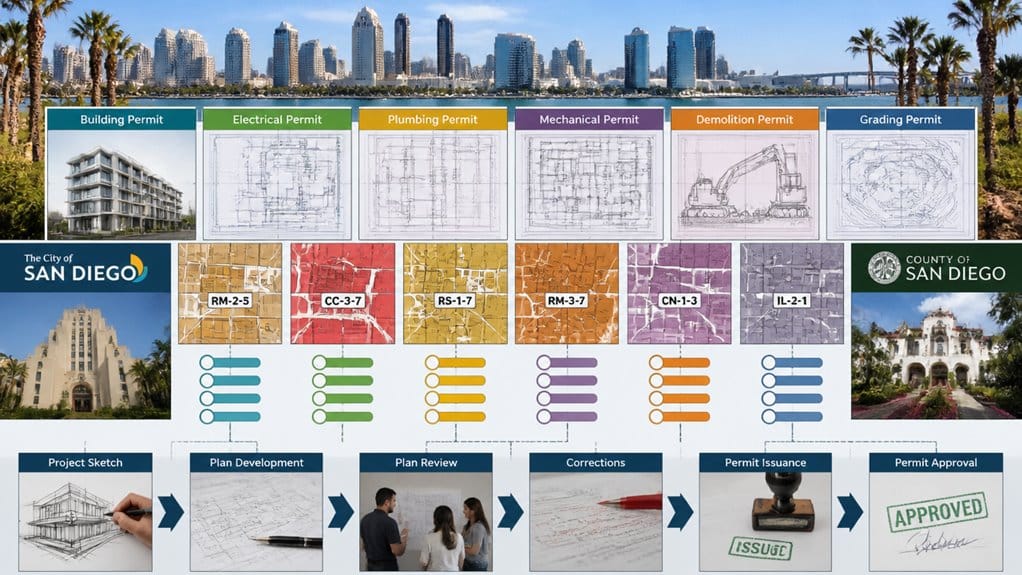
Before you apply for any permits in San Diego, match your project to the right permit path by figuring out what you’re actually doing and what code category it falls under.
Start with project classification: residential versus commercial, because that choice affects permit types, fees, and inspections.
Next, identify triggering activities like new construction, additions, demolition, structural alterations, or changes of use, since these usually require a building permit under SDMC and CBC.
Identify triggering activities—new construction, additions, demolition, structural alterations, or change of use—since they typically require a building permit under SDMC and CBC.
For repairs, be careful: roofing over existing sheathing, electrical changes beyond minor work, HVAC upgrades, or repiping often still need permits.
If you build an accessory structure, check size and setback thresholds, especially for ADUs tied to state ADU laws.
Finally, protect life-safety work—egress, fire separation, sprinklers, and smoke detectors demand permits.
Prep Drawings, Title 24, and Required Reports First
Before you submit anything, prep complete drawings with licensed stamps so plan checkers can verify scope, code references, and structural intent.
At the same time, start Title 24 early by choosing the compliance path and preparing CF1R, plus the supporting CF2R/CF3R or CBECC-Res documentation so you’re not rushing later.
If your project triggers structural or geotechnical reports, get those required documents in line first, because incomplete submissions usually cause delays and rework.
Drawings With Licensed Stamps
Once you start prepping permit drawings in San Diego, you should plan on getting licensed stamps on the documents that affect structural, electrical, mechanical, or plumbing work.
The City and County require sealed or stamped drawings prepared by California-licensed professionals, and they verify drawing accuracy at intake. If you submit un-stamped plans, they may be rejected, which slows everything down.
Make sure your contractor or designer holds the right license for the scope, such as A, C-3, C-10, C-36, P.E., or R.A. If the license doesn’t match the work, plan check fails or notices of noncompliance follow.
Stamped prep drawings also shift professional liability onto the licensee and can reduce plan-check cycles. Always confirm license status and insurance.
Title 24 Forms Early
Starting your permit drawings with Title 24 compliance documents right away can save you serious time in San Diego. When you plan early documentation, you align with California’s Title 24, Part 6 requirements, including the latest regulatory updates, so energy efficiency reviews don’t stall.
At intake, many city and county counters expect the compliance forms upfront, so missing CF1R data can trigger rejection or conditional approvals. Build your permit integration by including CF1R (and CF1R Residential) with your envelope specs, HVAC details, hot water, and lighting schedules.
This supports cost analysis through early modeling trade-offs, like insulation levels, HVAC sizing, and window performance, and it improves project timelines. Later, you complete CF2R at inspections, matching installed equipment to your CF1R, and add HERS or load calculations when required.
Submit Through the Right Agency (City vs County)
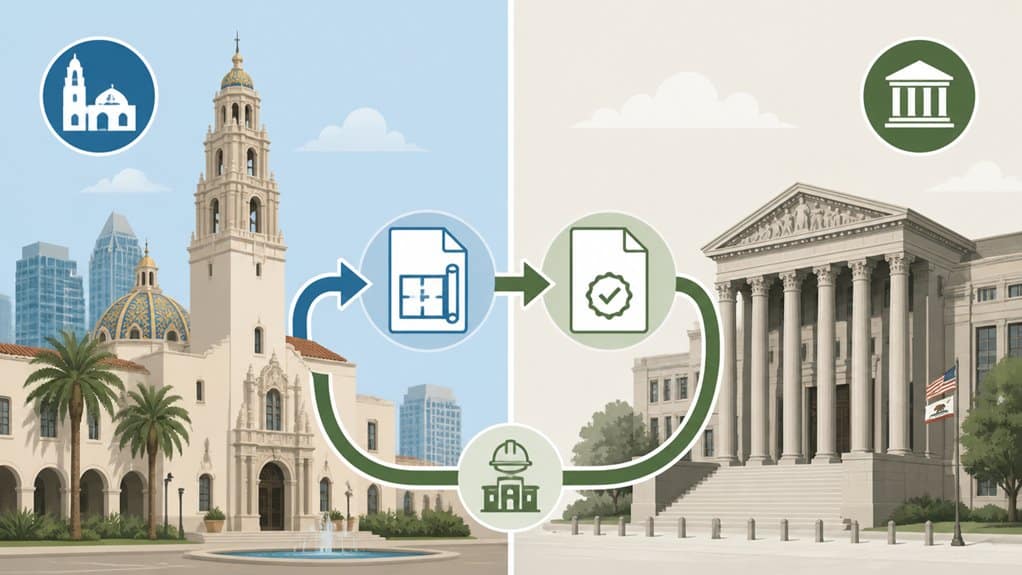
Choosing the right permitting agency in San Diego can make your project smoother, because the “city vs. county” line determines where your plans go and which rules apply.
Start with jurisdiction verification by checking city boundaries using SanGIS, plus your assessor parcel number (APN). Remember, annexation areas and sphere-of-influence changes can shift oversight, so confirm the latest boundary records.
If you’re inside the City of San Diego, submit through Development Services Online or CityView/ProjectDox, and follow city requirements for building, grading, and coastal development permits.
If your property is in unincorporated land, use the County ePermit portal or submit in person, and expect county reviews for land use and septic/OWTS.
Also, don’t forget special districts and fire review may add steps.
Get Through DSD Plan Check Comment Cycles Fast
To get through DSD plan check comment cycles fast, start by preparing complete scoping notes that clearly define your project scope, code basis, and required details.
Submit fully code-compliant drawings upfront, then respond to corrections quickly by using a comment-reply matrix that matches each issue to a specific revision, note, or calculation update.
When you mark changes clearly and consolidate related fixes, you reduce back-and-forth, which keeps your review timeline moving.
Prepare Complete Scoping Notes
When you prepare complete scoping notes up front, you help the Development Services Department (DSD) reviewers move faster because they can verify your intent, compliance path, and site constraints in the first review.
Start with a clear project scope summary: work type, square footage changes, existing versus proposed use, bedroom and bathroom counts, structural alterations, and any plumbing or HVAC impacts.
Then list the specific codes and standards you’re using, including the California Building Code edition, local amendments, energy code, and accessibility requirements, to show code compliance.
Add site constraints like FEMA flood zone status, steep slopes, geologic hazards, and any easements or right-of-way encroachments.
Reference related prior permits.
Request decisions upfront for variances or alternative materials.
Include key studies and reports, so common comment cycles drop.
Submit Code Compliant Drawings
Submitting code-compliant drawings sets the pace for a smooth Development Services Department (DSD) plan check, and it’s the quickest way to reduce repeat comment cycles.
You should align your submittal to current drawing standards and show clear code compliance from the first sheet. Start by filling the title sheet with permit info, scope, code editions, occupancy classification, and valuation.
Then include complete site, floor, roof/structural, elevations, and sections. Add structural loads, framing, connection notes, and a foundation plan referencing the soil report and engineer stamps when required.
Make accessibility and egress easy to verify with door clearances, landing sizes, and handrail details.
Finish with Title 24, Green, and energy/MEP diagrams plus calculation summaries, using properly formatted e-submittals.
Respond To Corrections Quickly
Once you get DSD plan check comments, treat them like a set of instructions, not a suggestion—because speed and clarity directly affect how many comment cycles you’ll face.
Read the entire comment set within 24 hours, then triage. Use your review strategy to group items into minor clerical, drawing revisions, calculation updates, and code interpretation disputes, so nothing blocks other disciplines.
Flag structural, MEP, or geotechnical needs immediately, and log expected turnaround times.
Build a master response log that ties each comment number to an action, owner, and date, and decide early whether you can fix it with a clarification letter, clouded/delta sheets, or a full resubmittal.
When you prepare your comment response package, cross-reference sheets, update title blocks, and keep PDFs searchable.
Estimate San Diego Permit Fees and Review Timelines
Estimating San Diego permit fees and review timelines starts with understanding what the City or County charges, because the total cost usually comes from several fee categories added together.
Estimating San Diego permit fees starts with understanding City/County charges, since totals are built from multiple fee categories.
For fee calculations, you treat plan check as a large piece, often 65%–80% of the permit fee, plus building, trade, and impact charges that vary by valuation and scope.
Timeline expectations depend on workload and number of disciplines. You’ll typically see intake in 1–3 business days if you apply online, while the first review often takes 2–6 weeks for many residential projects.
- Plan check + valuation multipliers
- Separate trade permits per item or unit
- Impact fees, issuance, and any express surcharges
Schedule Inspections in the Correct Order
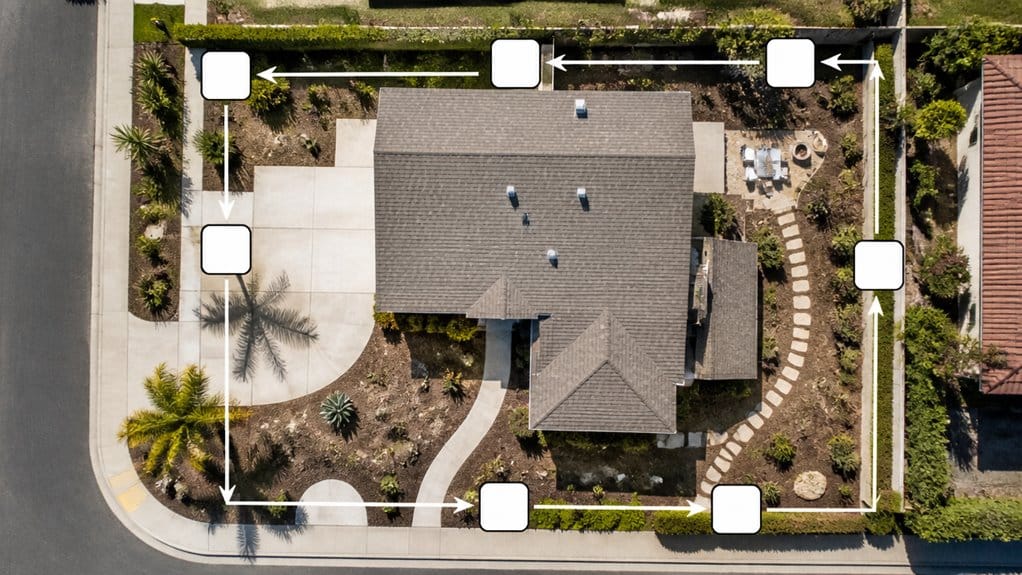
Why risk failed inspections when you can plan the order from the start? First, you follow San Diego’s required sequence: footing, foundation, framing, rough trades like plumbing/electrical/MEP, insulation, drywall, then final.
You schedule only after each preceding inspection is approved, because the city enforces this order through municipal code and permit conditions, and many inspectors won’t approve out-of-sequence work.
Use inspection readiness as your checklist, confirming required pressure tests, documentation, and completed systems before you request the next step.
When you do inspection scheduling, submit the correct permit number, inspection code, and address in eTRAKiT or by phone.
Choose timing wisely, since routine requests may fit same-day, while complex inspections often need several days.
Clear Zoning, Fire, and Coastal Approvals Early
After you lock in the inspection order, you should clear the permitting “checkpoints” that can stall your schedule if you wait—zoning, fire, and coastal rules. Start with zoning verification using San Diego GIS Portal and the Municipal Code, confirming setbacks, height, lot coverage, and whether discretionary permits like Coastal Development Permits are triggered. Next, run fire safety checks early by determining if San Diego Fire-Rescue plan review is needed for fire access, hydrants, sprinklers, and apparatus road clearance, especially for larger additions or multi-family projects. Then, confirm coastal approvals by checking Local Coastal Program jurisdiction and whether Coastal Development Permits apply, including public notice and potential California Coastal Commission escalation. Verify zoning + overlays (ADU standards, nonconforming conditions) include timeline considerations and ensure coordination with SDFD plan check aligned with building timing. Map coastal constraints and likely studies or exhibits.
Avoid Stop-Work: Stay Inspection-Ready From Day One
To avoid stop-work orders, you need to stay inspection-ready from day one, not scramble once inspectors show up.
Build your inspection readiness using a compliance checklist: submit a complete application packet, with correct code editions, licensed signatures, and accurate scope and valuation. Confirm parcel-specific requirements so you don’t face resubmittals.
Keep approved plans on-site, and make sure safe access to the work area stays clear. Before each inspection, stage required materials and test equipment, and follow the proper inspection sequence.
Post permits and required erosion or stormwater BMPs before grading. Document prior corrections and approvals with inspection tags.
Verify the inspector identity, keep written notes, and track correction lists so re-inspections go fast. Coordinate third-party test reports, too.
Wrapping It Up
When you match your project to the right San Diego permit, prep drawings, and submit to the correct agency, you’re basically stacking the odds in your favor. Stay inspection-ready from day one, schedule inspections in order, and clear zoning, fire, and coastal approvals early. Yes, permit timelines can feel slow, but with clean documentation and responsive revisions, you’ll cut delays fast. Finish smarter, not harder, and avoid the dreaded stop-work notice like it’s a red flag.


