


Use universal design features to keep you safe, independent, and comfortable at home. Prioritize zero-step entry, smooth ramps, and wide doors with enough turning space. Add bright, even lighting, motion lights, and slip-resistant flooring along walkways. In bathrooms, install grab bars, a shower bench, and non-slip surfaces, and use anti-scald valves. In kitchens, set reachable counters and lever-style controls. Finally, use pull-out storage and smart shutoff reminders to reduce falls, there’s more to learn next.
Start Here: Universal Design for Aging in Place Priorities
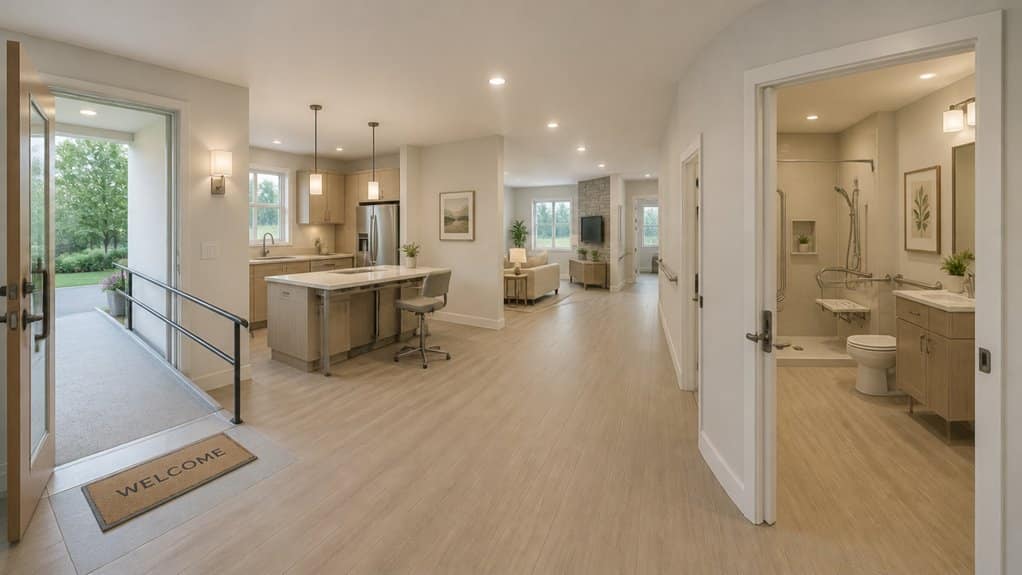
Before you make any changes, focus on priorities that help you stay safe, independent, and comfortable at home as you age. Start with clear pathways, good lighting, and reliable heating, because falls and cold rooms hurt first.
Next, choose universal design features that support social inclusion. For example, create seating areas where you can host friends, and add controls that are easy to reach and understand.
You should also plan for community support by designing an entry to invite neighbors in, even for short visits.
Keep tasks simple: organize storage within easy reach, label shared spaces, and reduce clutter.
When your home supports daily routines and connections, you feel more in control, and life feels easier.
Aging in Place Zero-Step Entry, Ramps, Door Widths
A zero-step entry helps you reach your home without traversing a risky threshold, and it often starts with smart site grading and a careful path from parking to the door. When you design for outdoor mobility, you reduce the strain on knees and ankles, and you lower fall risk. If you need a ramp, you plan for smooth slopes, stable surfaces, and landings where you can pause and turn. Keep ramp runs consistent, and use a handrail so you feel steady without rushing. For doorways, choose wider openings and easy-to-operate hardware, so wheelchairs, walkers, and strollers pass comfortably. Many homeowners use wheelchair accessibility improvements like ramp installation and expanded doorways after accidents to create a safer daily routine. Strong entryway design also includes enough turning space inside the doorway, which keeps daily routines simpler.
Safer Walkways: Lighting and Slip-Resistant Floors
When you design safer walkways, start by making every step easy to see and hard to slip on, especially at night or during bad weather. Use bright, even lighting along entrances, ramps, and turns, and place fixtures so shadows don’t hide changes in level. Add motion-activated or dusk-to-dawn lights for reliable outdoor surfaces safety.
Next, choose slip-resistant pathway materials that keep grip even when damp. Look for textured surfaces, proper traction ratings, and finishes that resist wear and algae. Keep connections smooth, but reduce abrupt edges between sidewalk sections, decking, and driveway crossings.
Clear debris, trim overhanging plants, and mark any step or ramp with high-contrast strips. When you combine lighting and traction, you reduce falls and boost confidence.
Bathroom Universal Design: Shower, Toilet, and Grab Bar Upgrades
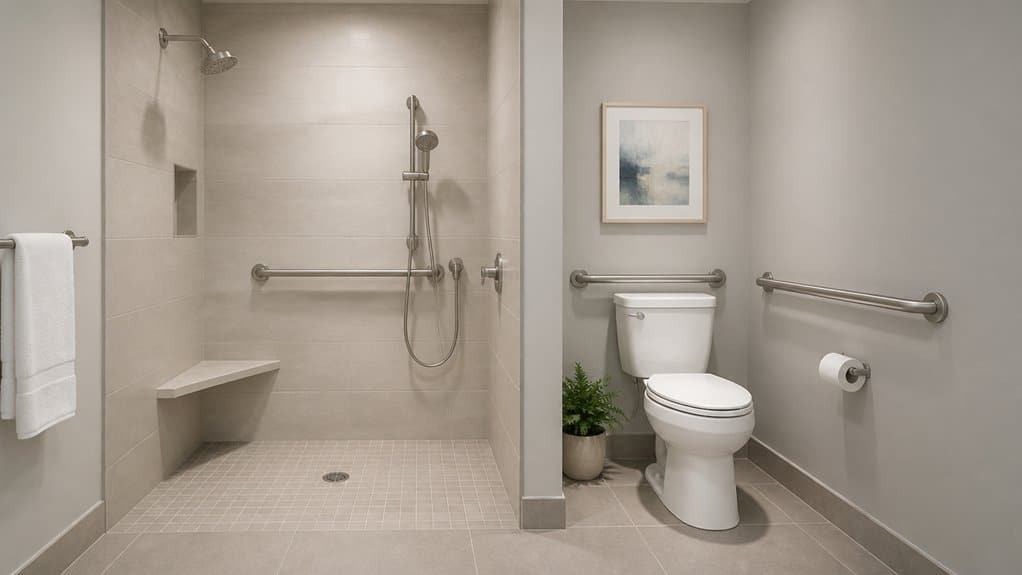
Upgrading the bathroom supports aging in place just as strongly as safer walkways do, because falls often happen inside during trips to the shower or toilet.
You can prevent hazards by tailoring daily surfaces and supports to your body’s needs. Start with these high-impact upgrades that improve confidence and reduce strain.
- Set comfortable toilet height and add clear grab bar placement near sitting, standing, and side transfers.
- Install shower benches and non slip mats; control water temperature with anti-scald valves for steadier, safer rinsing.
- Use accessible storage so shampoo, soap, and towels stay within easy reach, avoiding awkward bending or stretching.
You’ll notice fewer wobbly moments and smoother bathroom routines, which supports independence, and wheelchair accessibility modifications can further reduce barriers during daily use.
Aging in Place Kitchen Safety: Reach, Knobs, and Controls
When you plan your kitchen for aging in place, start with accessible countertop heights so you can work comfortably without overreaching. Choose easy-grip, lever-style controls for stoves, faucets, and appliances, and pair them with clear labels plus tactile cues so you can operate them confidently. These upgrades reduce strain and confusion, helping you stay safer and more independent day to day. For added safety, consider accessible kitchen layout elements that minimize reaching and potential trip hazards throughout the space.
Accessible Countertop Heights
Accessible countertop heights keep everyday tasks safer and easier, and they help you maintain independence as your mobility changes. You can choose heights that let you work without bending or stretching, so cooking stays comfortable.
Use an ergonomic design approach: align your knee space with the counter so you can pull in close, and keep frequently used items within easy reach. When you plan countertop materials, select durable, non-slip surfaces that stay stable under a damp cloth or spills.
- Set counter height for standing or seated tasks, using adjustable bases when possible.
- Create clear knee space under key sections, reducing pressure on hips and back.
- Place sink and prep areas at matching levels, so you don’t twist while washing or cutting.
Easy-Grip, Lever-Style Controls
Even with the right countertop height, kitchen tasks become safer only if you can operate faucets and appliances smoothly, without straining.
Choose easy-grip, lever-style controls that match an ergonomic design, so you can use less grip strength and fewer wrist twists. When you place levers within easy reach, you reduce the risk of spills caused by awkward turning.
Look for user-friendly interfaces on stoves, mixers, and dishwashers, where short lever travel quickly starts, stops, and adjusts settings. You can control water temperature with a gentle action, and you can pause cooking without fumbling.
Soft traction grips help your hand maintain contact, even when hands are damp. Test buttons and levers while standing or seated, so you know they work for you.
Clear Labels And Tactile Cues
- Label each control clearly and place labels at eye level.
- Use raised dots, ridges, or swipe patterns to guide by touch.
- Keep legends high-contrast and regularly check they stay legible.
Smart Storage and Safety Controls to Prevent Falls
You can reduce fall risk by using motion-sensing night lighting, so pathways stay visible without you fumbling for switches.
Add slip-resistant pull-out shelves to bring heavy items within easy reach and help you keep stable footing while moving around.
Finally, consider voice-controlled shutoff systems for stoves and other hazards, so you can turn things off quickly if you feel unsteady.
Motion-Sensing Night Lighting
Motion-sensing night lighting helps you move through your home safely at night, and it does so by turning on only when it detects motion. This approach supports ambient lighting where you need it, without blasting bright glare that can confuse your eyes.
With the right setup, you strengthen your safety awareness and reduce the risk of missteps on stairs, hallways, and routes to the bathroom.
- Position fixtures along likely travel paths, so light appears as you approach.
- Use warm, low-glare bulbs and adjust sensitivity to match your typical walking speed.
- Add timers or battery backup so the system stays reliable during outages.
You stay oriented, you react faster, and you can navigate independently.
Slip-Resistant Pull-Out Shelves
Slip-resistant pull-out shelves help you access items safely, especially when you need to bend, reach, or reposition yourself in the kitchen or pantry. When you install shelves with a grippy surface, you reduce slipping and dragging, even if your hands are slightly damp.
Pull-outs also let you keep heavy or frequently used items at comfortable heights, supporting an ergonomic design that minimizes strain. Look for smooth runners that extend fully and stop securely, so drawers don’t jerk back or slide away.
You should choose user-friendly features like raised rails that contain jars and prevent spills. With clear labeling and adjustable positions, you organize food and supplies logically, reducing clutter and trips.
Voice-Controlled Shutoff Systems
Smart storage and safety controls can make aging in place safer by reducing risky moments, and voice-controlled shutoff systems help you do exactly that.
When you leave the kitchen, laundry area, or bathroom, you can use voice activation to command lights, fans, or hot water to turn off. This matters because forgetting is common during busy days, especially when you feel rushed or distracted.
You also reduce fall risk by avoiding hurried returns to double-check switches.
- Use simple voice commands to shut off appliances safely.
- Receive automated alerts if a device stays on too long.
- Add backup switches for times when your voice, phone, or Wi‑Fi fails.
Wrapping It Up
When you plan universal design for aging in place, you choose safety that works every day, not just during emergencies. Zero-step entries ease arrivals, while better lighting and slip-resistant floors keep your path steady. In the bathroom, walk-in showers, reachable toilets, and secure grab bars reduce strain. In the kitchen, sensible reach and clearer controls prevent “too far” surprises. With smart storage and safety switches, you trade worry for confidence.


